According to recent research, the global autonomous AI agents market is projected to reach $9.9 billion in 2025 and is anticipated to grow significantly to $253.3 billion by 2034, registering a strong CAGR of 43.4% during the forecast period. This explosive growth is driven by rapid enterprise adoption, continuous advancements in artificial intelligence, and the expansion of automation across diverse industries. North America is expected to command the largest market share in 2025, holding about 40.7% of the global market.
This comprehensive guide explores autonomous AI agents’ fundamentals, applications, and 2025 developments, providing essential insights for businesses, developers, and decision-makers navigating AI transformation.
What Are Autonomous AI Agents? Understanding the Fundamentals
Autonomous AI agents are self-governing systems that operate independently without constant human intervention, making decisions and taking actions to achieve specific goals using machine learning and environmental awareness.
Autonomous AI agents represent a significant leap forward from traditional AI systems. Unlike conventional artificial intelligence that requires explicit programming for every scenario, autonomous agents possess the capability to learn, adapt, and make independent decisions based on their environment and objectives. These systems combine machine learning, natural language processing, and real-time data analysis to create intelligent entities that can operate with minimal human oversight.
For example: Learners today can learn French with Langua’s AI platform, which uses these same principles to personalize instruction, track progress, and respond dynamically to the user’s input mirroring how autonomous agents behave in complex business environments.
The key distinction lies in their autonomy – the ability to perceive their environment, process information, make decisions, and execute actions without waiting for human commands. This independence makes them particularly valuable for businesses seeking to automate complex processes, improve operational efficiency, and provide consistent service delivery around the clock.
Stay Updated—Join Our Newsletter!
Newsletter
Don’t miss on the latest updates in the world of AI. We dispatch custom reports and newsletters every week, with forecasts on trends to come. Join our community now!
What Makes an AI Agent Autonomous?
Several critical characteristics define true autonomy in AI agents. First, they must demonstrate independence from human input for routine decisions, utilizing pre-trained models and acquired knowledge to evaluate situations and determine appropriate responses. This capability extends beyond simple rule-following to include contextual understanding and adaptive reasoning.
Independence from human input: Operates without constant supervision or manual intervention
Goal-oriented behavior: Pursues specific objectives through strategic planning and execution
Environmental awareness: Continuously monitors and adapts to changing conditions
Learning capabilities: Improves performance through experience and feedback loops
Autonomous Agents vs Traditional AI Systems
The evolution from traditional AI to autonomous agents represents a fundamental shift in how intelligent systems operate. Traditional AI systems excel at specific, well-defined tasks but require extensive programming and human oversight for decision-making processes.
Aspect
Traditional AI
Autonomous AI Agents
Decision Making
Rule-based, pre-programmed responses
Dynamic, context-aware reasoning
Learning Approach
Supervised learning with labeled data
Continuous learning from environment
Human Intervention
Frequent oversight required
Minimal supervision needed
Adaptability
Limited to trained scenarios
Flexible response to new situations
Goal Orientation
Task-specific execution
Multi-objective optimization
Key Characteristics of Modern Autonomous Agents
Modern autonomous agents incorporate advanced capabilities that enable sophisticated operation in complex environments. Self-monitoring and self-correction mechanisms allow these systems to identify errors, assess their performance, and implement corrective actions without external intervention. This introspective capability is crucial for maintaining reliable operation in dynamic conditions.
Multi-task coordination represents another crucial advancement, enabling agents to manage multiple objectives simultaneously while optimizing resource allocation and prioritizing activities based on urgency and importance. Real-time decision making capabilities ensure that responses to environmental changes occur within appropriate timeframes, making these systems suitable for time-sensitive applications like customer service automation and operational monitoring.
According to a 2025 Gartner report, organizations implementing autonomous AI agents have reported a 30% reduction in operational costs, demonstrating the tangible business value these intelligent systems provide. Gartner emphasizes that successful adoption of autonomous AI agents requires strategic application and workflow rethinking to maximize return on investment.
How Do Autonomous AI Agents Work? Technical Architecture Explained
Autonomous AI agents operate through sensor input processing, internal model updating, goal evaluation, decision-making algorithms, and action execution, creating continuous feedback loops for environmental adaptation and learning.
The technical architecture of autonomous AI agents represents a sophisticated integration of multiple AI technologies working in harmony. At its core, the system operates through a continuous cycle of perception, reasoning, decision-making, and action. This architecture enables agents to maintain awareness of their environment while pursuing specific objectives through adaptive behavior.
Understanding how these systems work requires examining each component’s role in creating intelligent, autonomous behavior. From sensor systems that gather environmental data to learning modules that enable continuous improvement, each element contributes to the agent’s overall effectiveness and reliability.
Core Components of Autonomous AI Systems
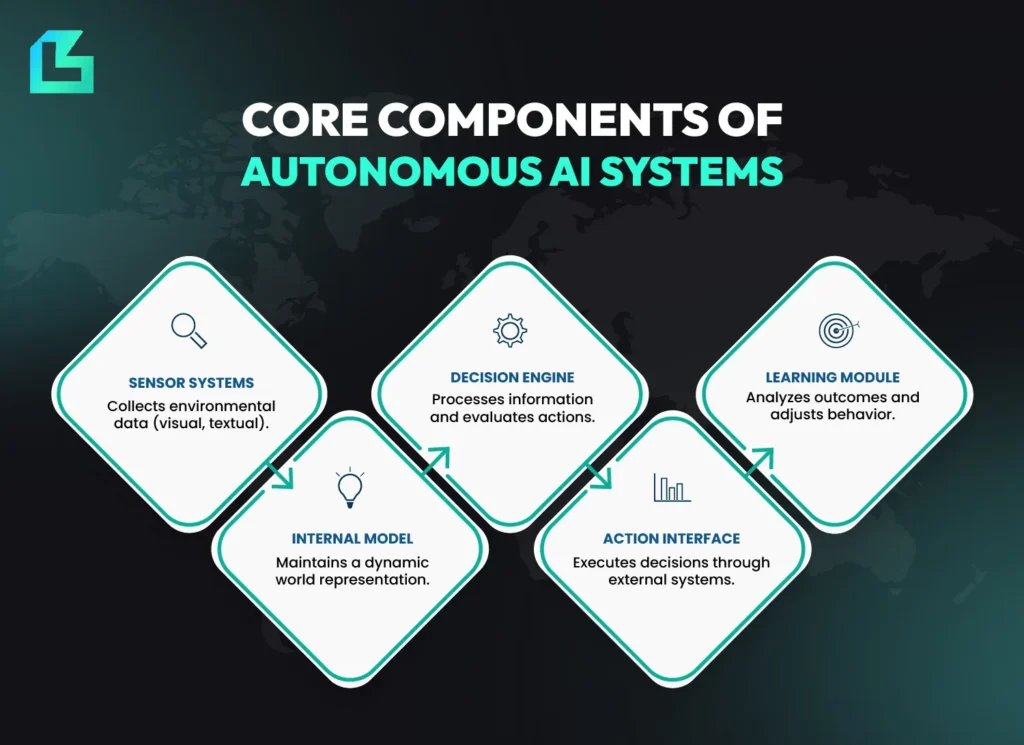
The foundation of autonomous AI agents rests on five critical components that work together to enable intelligent, independent operation. Each component serves a specific function while contributing to the system’s overall autonomy and effectiveness.
Discover the core components of autonomous AI agents, essential for understanding their function in 2025 and beyond, including sensor systems, decision engines, internal models and action interfaces.
Sensor Systems: Environmental data collection through various input channels including visual, textual, and numerical data streams
Internal Model: Maintains a dynamic representation of the world state, updated continuously as new information becomes available
Decision Engine: Processes information and evaluates potential actions based on goal-oriented reasoning and optimization algorithms
Action Interface: Executes decisions through interaction with external tools, systems, and environments
Learning Module: Analyzes outcomes and adjusts behavior patterns for continuous improvement and adaptation
These components integrate through sophisticated AI development frameworks that enable seamless communication and coordination between different system elements. The resulting architecture provides the flexibility and robustness needed for autonomous operation in complex, unpredictable environments.
Types of Autonomous Agents by Intelligence Level
Autonomous agents can be categorized based on their intelligence level and decision-making sophistication. Each type represents a different approach to achieving autonomous behavior, with varying degrees of complexity and capability.
What Are Reactive Agents?
Reactive agents respond directly to environmental stimuli without maintaining internal state information. They operate on simple condition-action rules, making them highly efficient for straightforward tasks but limited in complex scenarios requiring memory or planning.
Model-Based Agents
Model-based agents maintain an internal representation of their environment, enabling them to handle situations where complete environmental information is not immediately available. This internal model allows for more sophisticated decision-making by considering historical context and predicting future states.
Goal-Based Agents
Goal-based agents operate with specific objectives, using planning algorithms to determine sequences of actions that will achieve desired outcomes. These agents can evaluate different strategies and select optimal approaches based on their defined goals.
Utility-Based Agents
Utility-based agents optimize their actions based on utility functions that measure the desirability of different outcomes. This approach enables sophisticated trade-offs between competing objectives and supports complex decision-making in multi-goal environments.
Machine Learning Integration in Agent Architecture
Machine learning serves as the foundation for autonomous agent intelligence, enabling systems to improve their performance through experience and adaptation. Neural networks process complex input patterns and generate appropriate responses, while deep learning architectures handle sophisticated pattern recognition tasks.
Reinforcement learning algorithms optimize agent behavior through trial-and-error interactions with their environment. This approach enables agents to discover effective strategies without explicit programming, learning from the consequences of their actions to improve future performance. Natural language processing capabilities allow agents to communicate effectively with humans and understand textual information, expanding their applicability across diverse domains.
Based on industry experience, successful autonomous agents require robust error handling and fallback mechanisms, as real-world environments present unpredictable scenarios that pure algorithmic approaches cannot anticipate.
Autonomous AI Agents 2025: Latest Developments and Technical Advancements
2025 brings enhanced multi-modal processing, improved reasoning capabilities, better human-AI collaboration frameworks, and industry-specific autonomous agents with specialized domain expertise and regulatory compliance.
2025 brings enhanced reasoning capabilities, enabling agents to solve complex, multi-step problems. Multi-agent systems will allow autonomous agents to work collaboratively, sharing tasks and increasing overall efficiency. Additionally, advancements in domain-specific agents will provide specialized solutions for industries like healthcare, finance, and logistics. These advancements represent the culmination of years of research and development, bringing truly autonomous systems closer to mainstream business adoption.
Recent technological breakthroughs have addressed many of the limitations that previously constrained autonomous agent deployment. Enhanced safety mechanisms, improved alignment with human values, and better integration capabilities have made these systems more reliable and trustworthy for mission-critical applications.
Recent Developments in Autonomous AI Agents 2025
The most significant advancement in 2025 has been the development of enhanced reasoning and planning capabilities. Modern autonomous agents can now handle complex, multi-step problems that require abstract thinking and strategic planning. This improvement stems from advances in generative AI and large language model integration.
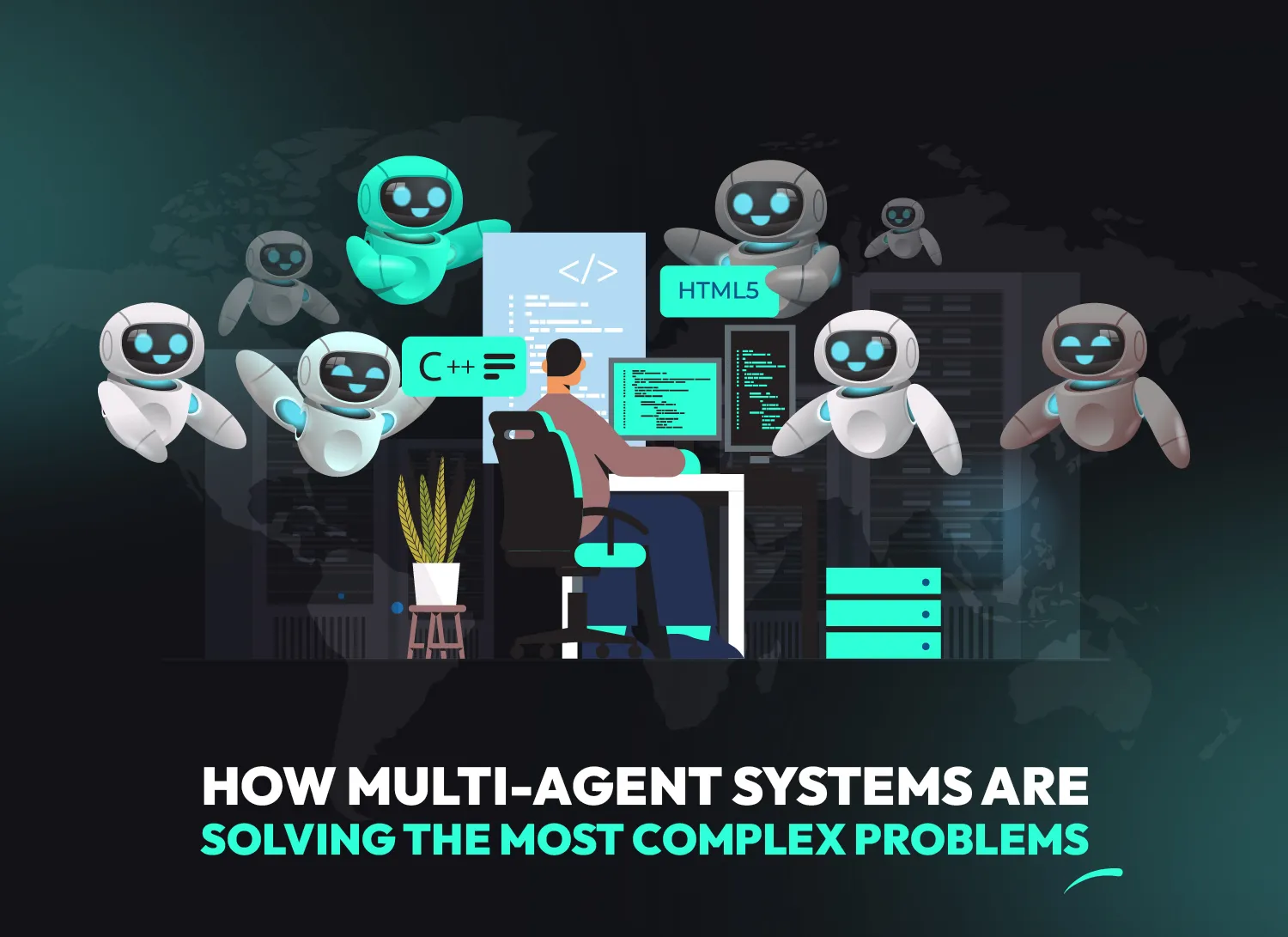
Multi-agent collaboration systems represent another major breakthrough, enabling teams of autonomous agents to work together toward common objectives. These systems can divide complex tasks among specialized agents, coordinate their activities, and combine their outputs to achieve results that would be impossible for individual agents.
Advanced reasoning: Complex problem-solving and abstract thinking capabilities
Multi-agent coordination: Collaborative systems working toward shared goals
Emotional intelligence: Better understanding and response to human emotions
Safety mechanisms: Improved alignment and risk mitigation strategies
Top Technical Advancements Shaping 2025
Large language model integration has revolutionized how autonomous agents communicate and process information. These models enable more natural, context-aware interactions while providing access to vast knowledge bases that enhance decision-making capabilities.
Large Language Model Integration: Enhanced natural communication and knowledge processing capabilities
Edge Computing Optimization: Reduced latency through local processing and real-time decision making
Federated Learning: Privacy-preserving improvement across distributed agent networks
Quantum-Enhanced Processing: Advanced optimization for complex computational challenges
Edge computing optimization has enabled autonomous agents to operate with minimal latency, processing information locally rather than relying on cloud-based systems. This advancement is particularly crucial for real-time applications like autonomous vehicles and industrial automation systems.
Fully Autonomous AI Agents: What’s Now Possible in 2025
The capabilities of fully autonomous AI agents in 2025 extend far beyond simple task automation. These systems can now handle end-to-end process automation, managing complex workflows from initiation to completion without human intervention. Cross-platform system integration allows agents to work seamlessly across different software environments and data sources.
Predictive problem resolution represents a significant advancement, enabling agents to identify and address potential issues before they impact operations. This proactive approach reduces downtime and improves system reliability. Autonomous resource allocation capabilities ensure optimal utilization of computing resources, storage, and network bandwidth based on real-time demand and priority assessment.
According to a 2025 survey conducted by Cloudera involving 1,484 IT leaders across 14 countries, 96% of organizations plan to increase their use of AI agents over the next 12 months, signaling rapid and widespread adoption of autonomous AI agents in enterprise environments. This reflects growing confidence in these systems’ abilities to drive efficiency, automation, and operational innovation across various business functions.
Trust the Experts in Autonomous AI, Let’s Build the Future of Your Business Together.
Let’s Talk
With our expertise in autonomous AI, we’ll help you seamlessly integrate cutting-edge technology to optimize your operations and drive long-term success.
Best Autonomous AI Agents Examples and Real-World Applications
Leading autonomous AI agents include advanced virtual assistants like Google Assistant, autonomous vehicles, smart home systems, and specialized business agents for customer service, content creation, and process automation.
Real-world applications of autonomous AI agents span across industries and use cases, demonstrating their versatility and practical value. From consumer-facing applications that enhance daily life to enterprise solutions that transform business operations, these systems are delivering measurable benefits across diverse domains.
The success of autonomous agents depends heavily on their ability to understand context, adapt to user needs, and integrate seamlessly with existing systems and workflows. The most effective implementations focus on solving specific problems while maintaining reliability and user trust.
Top Consumer Autonomous AI Agents
Google Assistant exemplifies successful consumer autonomous AI agent implementation, handling complex multi-step tasks like scheduling appointments, making reservations, and controlling smart home devices. Its ability to understand context and maintain conversation flow makes it truly autonomous in many scenarios.
Smart home devices represent another successful application area, with systems like intelligent home automation managing energy consumption, security systems, and environmental controls based on user preferences and behavioral patterns. These systems learn from user interactions and environmental conditions to optimize comfort and efficiency automatically.
Google Assistant: Voice-activated task automation and intelligent conversation management
Smart Home Devices: Automated environmental control and energy optimization
Virtual Personal Assistants: Calendar management, communication, and productivity enhancement
Autonomous Vehicles: Navigation, safety, and transportation decision-making
Enterprise and Business Applications
Enterprise autonomous AI agents focus on solving specific business challenges while integrating with existing systems and processes. Customer service agents provide 24/7 support capabilities, handling routine inquiries while escalating complex issues to human agents when necessary. These systems maintain conversation history and context, providing consistent service experiences.
Content creation systems automate the production of marketing materials, product descriptions, and social media content, adapting style and tone to match brand guidelines and target audience preferences. Financial trading bots analyze market conditions and execute trades based on pre-defined strategies, operating continuously across global markets.
Application Area
Primary Function
Business Value
Customer Service
24/7 support automation
Reduced costs, improved response times
Content Creation
Automated marketing materials
Increased productivity, consistent messaging
Financial Trading
Market analysis and execution
Continuous operation, reduced emotional bias
Supply Chain
Inventory and logistics optimization
Improved efficiency, reduced waste
Emerging Application Areas in 2025
Healthcare diagnostics represents a rapidly growing application area, with autonomous agents analyzing medical images, monitoring patient vital signs, and identifying potential health risks. These systems support healthcare professionals by providing continuous monitoring and early warning capabilities that improve patient outcomes.
Legal research applications utilize autonomous agents to analyze legal documents, research case precedents, and generate initial document drafts. Educational applications include AI-powered tutoring systems that adapt to individual learning styles and pace, providing personalized instruction and assessment.
Scientific research applications leverage autonomous agents to generate hypotheses, design experiments, and analyze results, accelerating the pace of discovery across various scientific disciplines. These systems can process vast amounts of research literature and identify patterns that might be missed by human researchers.
Performance Metrics and Success Stories
The effectiveness of autonomous AI agents can be measured through various performance metrics that demonstrate their business value and operational impact. In manufacturing, the implementation of AI agents has been shown to increase factory productivity by up to 80%, improve production throughput by 20%, and reduce repair costs by as much as 40% by enabling predictive maintenance with up to 95% accuracy. In customer service, AI-powered virtual agents achieve a 50-65% reduction in response times, greatly enhancing customer experience and operational agility.
Cost reduction statistics show significant savings across implementations of autonomous AI agents. Organizations report operational cost reductions typically ranging from 20% to 35% by automating repetitive tasks and streamlining workflows, resulting in substantial efficiency gains. Additionally, positive user reception is evident, with many organizations reporting improved customer experience and satisfaction as a result of AI deployment, reflecting broader industry trends toward acceptance and effectiveness of autonomous AI systems.
The Role of Autonomous AI Agents in Business and Industry Impact
Autonomous AI agents transform businesses by automating complex workflows, enhancing customer experiences, reducing operational costs, and enabling 24/7 service delivery while freeing human workers for strategic tasks.
The integration of autonomous AI agents into business operations represents a fundamental shift in how organizations approach efficiency, scalability, and customer service. These systems enable businesses to maintain continuous operations, provide consistent service quality, and respond to customer needs without the constraints of human availability or capacity limitations.
The transformative impact extends beyond simple automation, encompassing strategic advantages like improved decision-making, predictive capabilities, and the ability to process vast amounts of data in real-time. Organizations that successfully implement autonomous agents gain competitive advantages through operational excellence and enhanced customer experiences.
How Autonomous AI Agents Will Impact Industries in 2025
Healthcare industry transformation through autonomous agents focuses on patient care automation and diagnostic assistance. These systems monitor patient conditions continuously, alert healthcare providers to changes, and assist in treatment planning. The impact includes improved patient outcomes, reduced healthcare costs, and enhanced provider efficiency.
The finance sector leverages autonomous agents for risk assessment, fraud detection, and automated trading. These systems analyze market patterns, assess loan applications, and identify suspicious transactions with greater accuracy and speed than traditional methods. Fintech applications benefit from real-time decision-making capabilities that improve customer experiences.
Retail industry applications include personalized shopping experiences, inventory management, and dynamic pricing strategies. Autonomous agents analyze customer behavior, predict demand patterns, and optimize product recommendations to increase sales and customer satisfaction.
Manufacturing: Quality control, predictive maintenance, production optimization
Salesforce Autonomous Agents and CRM Integration
Salesforce’s implementation of autonomous agents demonstrates the potential for CRM transformation through intelligent automation. These systems automate customer relationship management tasks, from lead qualification to follow-up scheduling, while maintaining detailed interaction histories and insights.
Sales process optimization through autonomous agents includes automated prospect research, meeting scheduling, and proposal generation. These systems analyze customer data to identify the most promising opportunities and recommend optimal engagement strategies. Predictive customer behavior analysis enables proactive outreach and personalized communication strategies.
Automated lead qualification processes evaluate incoming leads based on predefined criteria, scoring prospects and routing qualified leads to appropriate sales representatives. This automation ensures consistent lead handling while reducing response times and improving conversion rates.
Autonomous Agents Market Growth and Opportunities
Market projections for 2025 indicate continued rapid growth in autonomous AI agent adoption, with the global autonomous AI and autonomous agents market expected to be valued at approximately $9.9 billion in 2025 and forecasted to expand substantially to over $44.7 billion by 2029, exhibiting a compound annual growth rate (CAGR) of around 45.7%. Longer-term forecasts anticipate the market reaching upwards of $120 billion by 2035, driven by increasing investments in specialized agent development, industry-specific solutions, and applications in safety-critical domains such as healthcare, manufacturing, and autonomous transportation.
Market Segment
2025 Projection
Growth Rate
Enterprise Automation
$18.2 billion
42% CAGR
Customer Service
$12.4 billion
38% CAGR
Healthcare
$8.7 billion
45% CAGR
Financial Services
$6.5 billion
35% CAGR
Geographic adoption differences show varying rates of implementation, with developed markets leading in enterprise applications while emerging markets show strong growth in consumer-facing agents. The competitive landscape includes both established technology companies and innovative startups specializing in specific agent applications.
Customer Service Revolution Through AI Agents
The transformation of customer service through autonomous AI agents represents one of the most visible impacts of this technology. 24/7 availability ensures customer inquiries receive immediate attention, regardless of time zones or business hours. Instant response capabilities eliminate wait times for routine inquiries while providing consistent service quality.
Multi-language support capabilities enable global businesses to serve diverse customer bases without maintaining multilingual human support teams. Automated translation and cultural adaptation ensure appropriate communication styles across different regions and cultures.
Escalation protocols ensure that complex issues requiring human judgment are seamlessly transferred to appropriate human agents, maintaining service continuity while optimizing resource allocation. Customer satisfaction improvement metrics show significant gains, with autonomous agent implementations reporting 25% improvement in customer satisfaction scores.
Industry experience shows that successful autonomous agent implementations require careful change management, as organizations must balance automation benefits with employee concerns and maintain human oversight for complex decisions.
How to Build Autonomous AI Agents: Development and Implementation Guide
Building autonomous AI agents requires selecting appropriate frameworks, defining clear objectives, implementing feedback loops, integrating external tools, and establishing monitoring systems for continuous improvement and reliability.
Developing autonomous AI agents requires a systematic approach that combines technical expertise with careful planning and iterative development. The process involves multiple stages, from conceptualizing agent objectives to deploying and monitoring production systems. Success depends on understanding both the technical requirements and the business context in which the agent will operate.
The development process benefits from leveraging established frameworks and best practices while allowing for customization based on specific requirements. AI consulting services can provide valuable guidance throughout the development lifecycle, ensuring optimal architecture decisions and implementation strategies.
Essential Steps for Building Autonomous AI Agents
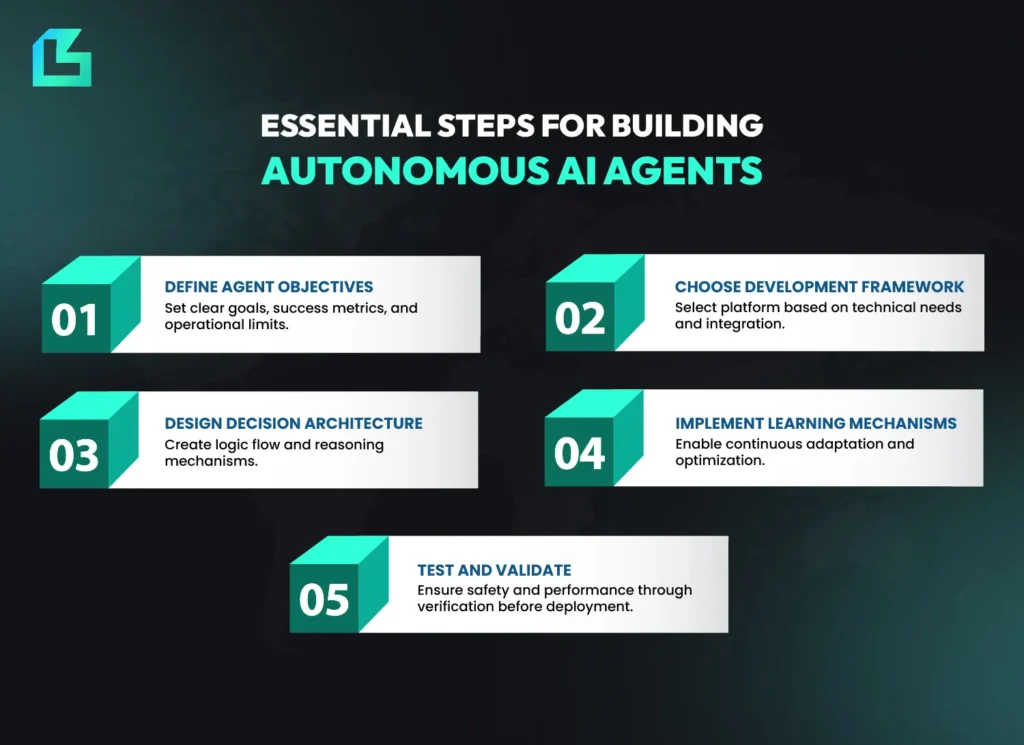
The development process begins with defining clear agent objectives that specify desired outcomes, success metrics, and operational constraints. This definition phase establishes the foundation for all subsequent development decisions and helps ensure alignment with business requirements.
A step-by-step guide to building autonomous AI agents, covering key stages like defining objectives, selecting frameworks and implementing learning mechanisms for 2025.
Define Agent Objectives: Clear goal specification with measurable success criteria and operational boundaries
Choose Development Framework: Platform selection based on technical requirements and integration needs
Design Decision Architecture: Logic flow design and reasoning mechanisms for autonomous operation
Implement Learning Mechanisms: Continuous improvement systems for adaptation and optimization
Test and Validate: Comprehensive safety and performance verification before deployment
Framework selection significantly impacts development efficiency and system capabilities. Popular options include LangChain for language model integration, AutoGPT for general-purpose automation, and custom frameworks built on TensorFlow or PyTorch for specialized applications. The choice depends on specific requirements, team expertise, and integration needs.
Best Use Cases for Autonomous AI Agents
Repetitive task automation represents an ideal starting point for autonomous agent implementation. These applications provide clear value propositions while minimizing risk through well-defined scope and predictable outcomes. Data processing and analysis tasks benefit significantly from agent automation, handling large volumes of information consistently and accurately.
Complex decision-making scenarios involving multiple variables and constraints showcase the sophistication of modern autonomous agents. These systems can evaluate numerous factors simultaneously, optimize outcomes across competing objectives, and adapt strategies based on changing conditions.
Repetitive Task Automation: Data processing, report generation, and routine maintenance tasks
Complex Decision Making: Resource optimization, strategic planning, and multi-variable analysis
Real-time Response Systems: Alert monitoring, incident response, and emergency management
Predictive Maintenance: Equipment monitoring, failure prediction, and maintenance scheduling
AI Agent Automation for Startups in 2025
Startups face unique challenges and opportunities when implementing autonomous AI agents. Cost-effective implementation strategies focus on leveraging cloud-based services and open-source tools to minimize upfront investment while maintaining flexibility for future scaling. Custom product development approaches allow startups to build competitive advantages through specialized agent capabilities.
Open-source tools and frameworks provide accessible entry points for startup development teams. Frameworks like Hugging Face Transformers, LangChain, and AutoGPT offer robust capabilities without licensing fees, enabling experimentation and rapid prototyping. Resource allocation planning should account for both development costs and ongoing operational expenses.
Scalability considerations become critical as startups grow, requiring agent architectures that can handle increasing workloads and complexity. Early architectural decisions should anticipate future growth while maintaining cost-effectiveness during initial phases.
Integration with External Tools and Systems
API connectivity serves as the foundation for external tool integration, enabling autonomous agents to interact with existing business systems, databases, and third-party services. Robust integration capabilities allow agents to access real-time information and execute actions across multiple platforms.
Security and access management protocols ensure that autonomous agents operate within appropriate permissions and maintain data confidentiality. Authentication mechanisms, encryption standards, and audit trails protect sensitive information while enabling necessary system access.
Integration Type
Key Considerations
Implementation Priority
Database Access
Security, performance, data consistency
High
API Integration
Rate limits, authentication, error handling
High
Cloud Services
Scalability, costs, vendor lock-in
Medium
Legacy Systems
Compatibility, stability, migration paths
Low
Development Challenges and Solutions
Common technical obstacles include handling edge cases, managing system complexity, and ensuring reliable performance under varying conditions. These challenges require comprehensive testing strategies, robust error handling, and carefully designed fallback mechanisms.
Security and privacy considerations demand attention throughout the development lifecycle. Data protection protocols, access controls, and compliance requirements must be integrated into agent architectures from the beginning rather than added as afterthoughts.
Scalability planning addresses both technical infrastructure requirements and operational considerations. Successful implementations anticipate growth patterns and design systems that can adapt to changing demands without requiring complete rebuilding.
Autonomous AI Agents vs Traditional Systems: A Comprehensive Comparison
Autonomous AI agents surpass traditional AI through independent decision-making, continuous learning, environmental adaptation, and goal-oriented behavior, while traditional AI requires constant human guidance and programming updates.
The evolution from traditional AI systems to autonomous agents represents a paradigm shift in artificial intelligence applications. While traditional AI excels at specific, well-defined tasks, autonomous agents operate with greater flexibility and independence, adapting to new situations without explicit programming for every scenario.
Understanding these differences helps organizations make informed decisions about which approach best suits their specific needs and operational requirements. The comparison reveals distinct advantages and limitations of each approach across various application domains.
Comparison of Autonomous AI Agents 2025 vs Previous Generations
The technological advancement between traditional AI and 2025 autonomous agents demonstrates significant progress in capability, flexibility, and operational independence. These improvements enable new application possibilities while reducing the human oversight required for effective operation.
Feature
Traditional AI
2025 Autonomous Agents
Decision Making
Rule-based, human programmed
Independent, goal-oriented
Learning Capability
Limited, requires retraining
Continuous, self-improving
Human Intervention
Frequent oversight needed
Minimal intervention required
Adaptability
Static responses
Dynamic environmental adaptation
Goal Management
Single-purpose tasks
Multi-objective optimization
Context Understanding
Limited contextual awareness
Deep contextual reasoning
The progression from rule-based systems to adaptive, learning-capable agents represents years of advancement in machine learning, natural language processing, and cognitive computing. Modern autonomous agents combine multiple AI technologies to create more sophisticated and capable systems.
Most Advanced Autonomous AI Agents 2025: Market Leaders
Technical capability benchmarks reveal significant improvements in reasoning, planning, and execution abilities among leading autonomous agent platforms. Performance metrics include response accuracy, task completion rates, and adaptation speed to new scenarios.
Innovation leadership analysis shows companies investing heavily in agent research and development, with focus areas including safety mechanisms, ethical decision-making, and domain-specific expertise. Market adoption rates indicate growing confidence in autonomous agent reliability and effectiveness.
The competitive landscape includes established technology companies like Google, Microsoft, and OpenAI, alongside specialized startups developing niche applications. Each brings unique strengths and approaches to autonomous agent development, contributing to rapid advancement across the field.
Human Workers vs Autonomous AI Agents: Collaborative Future
The relationship between human workers and autonomous AI agents evolves toward collaboration rather than replacement. Complementary skill sets enable humans and agents to work together effectively, with agents handling routine tasks while humans focus on creative, strategic, and relationship-building activities.
Task division optimization identifies the most appropriate roles for humans and agents based on task characteristics, required skills, and value creation potential. This approach maximizes overall productivity while ensuring job satisfaction and professional development for human workers.
Training and adaptation requirements help organizations prepare their workforce for effective collaboration with autonomous agents. This includes understanding agent capabilities, developing complementary skills, and learning to work effectively in human-AI teams. IT staff augmentation services can help bridge skill gaps during transition periods.
Evolution from Reactive to Autonomous Systems
The historical development timeline shows progression from simple automated systems through rule-based AI to today’s autonomous agents. Each generation built upon previous capabilities while addressing limitations and expanding application possibilities.
Key technological breakthroughs include advances in machine learning algorithms, increased computational power, availability of large datasets, and improved understanding of cognitive processes. These developments enabled more sophisticated reasoning and decision-making capabilities.
Future evolution predictions suggest continued advancement toward general-purpose autonomous agents capable of handling diverse tasks and domains. This progression will likely include improved common sense reasoning, better integration with physical systems, and enhanced collaboration capabilities.
Based on industry experience, the most successful autonomous agent implementations focus on human-AI collaboration rather than replacement, leveraging AI for data processing and routine decisions while preserving human judgment for complex, ethical, and creative challenges.
Future of Autonomous AI Agents: Trends and Predictions for 2025 and Beyond
The future of autonomous AI agents includes multi-agent ecosystems, enhanced emotional intelligence, quantum computing integration, and specialized industry solutions, fundamentally transforming how businesses operate and individuals interact with technology.
The trajectory of autonomous AI agent development points toward increasingly sophisticated systems that can handle complex, real-world challenges with minimal human intervention. Future developments will likely focus on improving reliability, expanding capabilities, and enabling more natural human-agent collaboration.
Emerging trends suggest a shift toward specialized agents designed for specific industries and use cases, combined with general-purpose agents capable of handling diverse tasks. This dual approach will provide both depth of expertise and breadth of capability.
Stay Ahead with Expert AI Guidance. Together, Let’s Shape the Future of Your Business.
Let’s Talk
With our expert AI solutions, we’ll help you navigate the evolving landscape and drive your business towards lasting success and innovation.
Society-wide transformation impacts extend beyond business applications to affect education, healthcare, governance, and daily life. Autonomous agents will enable more personalized services, efficient resource allocation, and improved quality of life through intelligent automation of routine tasks.
Economic model disruptions include changes in employment patterns, new business models based on agent capabilities, and shifts in value creation. Organizations that adapt to these changes will gain competitive advantages, while those that resist may face challenges maintaining relevance.
New job categories and skill requirements emerge as autonomous agents handle routine tasks, creating demand for roles focused on agent management, ethical oversight, and human-AI collaboration. Educational systems must adapt to prepare workers for this transformed landscape.
Personalized Services: Tailored experiences across multiple domains
Resource Optimization: Efficient allocation and utilization of resources
New Business Models: Agent-enabled services and capabilities
Educational Transformation: Adaptive learning and skill development
Top Trends in Autonomous AI Agents 2025
Multi-agent collaboration represents a significant trend, with systems of autonomous agents working together to accomplish complex objectives. These coordinated networks can handle tasks that exceed the capabilities of individual agents while maintaining efficiency and reliability.
Multi-Agent Collaboration: Coordinated networks solving complex problems through specialization and cooperation
Emotional Intelligence Integration: Enhanced understanding and response to human emotions and social cues
Industry Specialization: Domain-specific expertise and compliance with sector regulations
Edge Computing Integration: Local processing capabilities for reduced latency and improved privacy
Quantum-Enhanced Decision Making: Advanced optimization for complex computational challenges
Emotional intelligence integration enables more natural interactions between humans and agents, improving user satisfaction and adoption rates. These capabilities include understanding emotional context, adapting communication styles, and providing empathetic responses appropriate to different situations.
What to Expect from Autonomous AI Agents in the Future
Short-term developments (2025-2027) focus on enhanced reasoning capabilities and improved safety mechanisms. These improvements will increase reliability and expand the range of tasks suitable for autonomous agent handling. Better safety protocols will enable deployment in more critical applications.
Medium-term evolution (2027-2030) emphasizes cross-platform integration and standardization. This period will see improved interoperability between different agent systems and platforms, enabling more seamless integration across diverse technology ecosystems.
Long-term prospects (2030+) include the development of general autonomous intelligence systems capable of handling diverse tasks across multiple domains without specialized programming. These systems will represent a significant milestone in artificial intelligence development.
Autonomous AI Agents in 2025 and Beyond: Technology Roadmap
Infrastructure development requirements include enhanced computing capabilities, improved network connectivity, and robust security frameworks. These technological foundations will support more sophisticated agents operating at greater scale and complexity.
Regulatory framework evolution addresses safety, privacy, and ethical considerations as autonomous agents become more prevalent. Governance structures will balance innovation encouragement with appropriate oversight and risk management.
Timeline
Key Developments
Market Impact
2025-2027
Enhanced reasoning, safety improvements
Increased enterprise adoption
2027-2030
Cross-platform integration, standardization
Mainstream consumer applications
2030+
General autonomous intelligence
Societal transformation
Challenges and Opportunities Ahead
Technical limitations requiring attention include improving common sense reasoning, handling ambiguous situations, and maintaining performance in unpredictable environments. Continued research and development will address these challenges through advances in machine learning and cognitive computing.
Ethical considerations encompass fairness, transparency, and accountability in agent decision-making. Solutions include explainable AI techniques, bias detection and mitigation strategies, and human oversight mechanisms for critical decisions.
Market opportunities span across industries and applications, with particular growth potential in healthcare technology, education, and sustainable resource management. Risk mitigation strategies help organizations navigate implementation challenges while maximizing benefits.
Geographic Trends and Regional Variations in Autonomous AI Agent Adoption
Autonomous AI agent adoption varies globally due to infrastructure maturity, regulatory frameworks, cultural acceptance, and economic conditions, creating distinct regional development patterns and implementation strategies.
Regional differences in autonomous AI agent adoption reflect varying technological infrastructure, economic conditions, regulatory environments, and cultural attitudes toward automation. These factors create distinct patterns of implementation and usage across different geographic markets.
Understanding regional variations helps organizations develop appropriate strategies for global deployment, addressing local requirements while leveraging universal capabilities. Successful implementations require adaptation to local conditions while maintaining core functionality.
Factors Influencing Regional Differences
Infrastructure maturity plays a crucial role in determining adoption rates and implementation success. Regions with advanced telecommunications networks, reliable internet connectivity, and modern computing infrastructure support more sophisticated autonomous agent deployments.
Policy environments vary significantly across regions, with some areas implementing comprehensive AI governance frameworks while others maintain more flexible approaches. These regulatory differences influence development priorities, safety requirements, and deployment strategies.
Cultural and economic conditions affect user acceptance, implementation costs, and available talent pools. Regions with strong technology sectors and cultural openness to automation typically show faster adoption rates and more innovative applications.
Infrastructure Maturity: Network reliability, computing resources, and technical support capabilities
Policy Environment: Regulatory frameworks, compliance requirements, and government support programs
Cultural Factors: Acceptance of automation, privacy concerns, and change readiness
Economic Conditions: Investment availability, implementation costs, and market demand
Comparison of Regional Trends
Digitally advanced regions demonstrate faster adoption rates due to robust infrastructure and strong technical talent pools. These areas typically lead in innovation and serve as testing grounds for new agent capabilities and applications.
Region Type
Key Characteristics
Observed Differences
Digitally Advanced
High adoption, strong infrastructure
Faster transformation, more innovation
Developing
Limited access, slower rollout
Gradual adoption, high variability
Regulated
Strong policy enforcement
More caution, ethical constraints
Developing regions show significant variation in adoption patterns, with urban areas typically advancing faster than rural areas. Cost considerations and infrastructure limitations influence the types of agents deployed and their implementation timelines.
Regional Market Opportunities
Infrastructure investment requirements create opportunities for technology providers and system integrators. Regions investing in digital transformation initiatives present significant markets for autonomous agent solutions across multiple sectors.
Localization and cultural adaptation needs require specialized development approaches that consider local languages, business practices, and regulatory requirements. These requirements create opportunities for regional partnerships and customized solutions.
Partnership and collaboration models enable international companies to enter new markets while providing local organizations access to advanced technologies. These arrangements often combine global expertise with local market knowledge.
Industry experience suggests that digitally advanced regions will lead autonomous AI agent innovation, while emerging markets present significant growth potential as infrastructure develops and costs decrease.
At a Glance: Key Takeaways
Definition: Autonomous AI agents are self-governing systems that operate independently, making decisions and taking actions to achieve goals without constant human supervision
Key Applications: Customer service automation, healthcare diagnostics, financial trading, supply chain optimization, and content creation
Development Requirements: Clear objectives, appropriate frameworks, external tool integration, and continuous monitoring systems
Market Growth: The global autonomous AI agents market is expected to reach about $9.9 billion in 2025 and grow to over $44.7 billion by 2029, with a strong CAGR of approximately 45.7%.
Future Trends: Multi-agent ecosystems, quantum-enhanced processing, edge computing integration, and general autonomous intelligence
Implementation Strategy: Start with repetitive tasks, ensure robust testing, plan for scalability, and maintain human oversight for complex decisions
Frequently Asked Questions
What are autonomous AI agents and how do they differ from regular AI?
Autonomous AI agents are self-governing systems that operate independently without constant human supervision, making decisions and taking actions to achieve goals. Unlike regular AI that follows predetermined rules, autonomous agents adapt to new situations, learn from experience, and modify their behavior based on environmental feedback and changing conditions.
How can autonomous AI agents be used in business in 2025?
Businesses use autonomous AI agents for customer service automation, predictive analytics, supply chain optimization, content creation, and process automation. They enable 24/7 operations, reduce costs, improve efficiency, and free human employees for strategic tasks requiring creativity and complex decision-making while maintaining consistent service quality.
What makes an AI agent truly autonomous?
True autonomy requires independent goal-setting, environmental awareness, adaptive decision-making without human intervention, continuous learning capabilities, and the ability to handle unexpected situations. Autonomous agents must balance multiple objectives, manage resources, and operate safely within defined parameters while achieving desired outcomes through intelligent reasoning.
What are the best examples of autonomous AI agents available today?
Leading examples include Google Assistant for personal task management, autonomous vehicles for transportation, smart home systems for environmental control, financial trading algorithms, customer service chatbots, and robotic process automation tools that handle complex business workflows without human oversight while maintaining reliability and accuracy.
How do I build autonomous AI agents for my startup?
Start by defining clear objectives, choosing appropriate development frameworks like LangChain or AutoGPT, implementing feedback mechanisms, integrating with existing systems through APIs, and establishing monitoring protocols. Focus on specific use cases, ensure proper testing, and plan for gradual scaling based on performance metrics and user feedback.
Stay Updated—Join Our Newsletter!
Newsletter
Don’t miss on the latest updates in the world of AI. We dispatch custom reports and newsletters every week, with forecasts on trends to come. Join our community now!
Conclusion:
Autonomous AI agents represent a transformative technology that will fundamentally reshape how businesses operate and individuals interact with digital systems. From enhancing operational efficiency and reducing costs to enabling 24/7 service delivery and complex decision-making, these intelligent systems offer unprecedented opportunities for innovation and competitive advantage. The key to success lies in understanding their capabilities, implementing them strategically, and maintaining appropriate human oversight for optimal results.
As we move into 2025 and beyond, organizations that embrace autonomous AI agents while addressing implementation challenges will be best positioned to thrive in an increasingly automated world. The technology continues to evolve rapidly, with improvements in reasoning capabilities, safety mechanisms, and industry-specific applications making these systems more reliable and valuable than ever before.
Ready to explore how autonomous AI agents can transform your business operations? Contact Kodexo Labs for expert consultation on AI development and implementation strategies tailored to your specific needs. Our experienced team specializes in creating custom autonomous agent solutions that deliver measurable business value while ensuring reliability and scalability for long-term success.
The autonomous AI revolution is accelerating, and early adopters will gain significant competitive advantages in efficiency, customer experience, and operational excellence. The future belongs to organizations that successfully integrate human expertise with autonomous AI capabilities, creating synergies that drive innovation and growth in the digital economy.
Autonomous AI agents represent a transformative technology for 2025 and beyond, offering unprecedented automation capabilities while requiring strategic implementation and expert guidance for successful business integration and competitive advantage.
Syed Ali Hasan Shah, a content writer at Kodexo Labs with knowledge of data science, cloud computing, AI, machine learning, and cyber security. In an effort to increase awareness of AI’s potential, his engrossing and educational content clarifies technical challenges for a variety of audiences, especially business owners.
Hear from our clients and why 50+ businesses
trust Kodexo Labs
Kodexo Labs has delivered a fully functional MVP on time, and testers
reported faster check-ins after the product launch. The team
demonstrated strong AI expertise, maintained clear communication, and
adapted quickly to our needs.
Annalisa Signorelli
Founder & CEO, Pet-X Solutions
AWARDS
Share Your Requirements to help our experts understand your business objectives and create your customized plan.
By providing a telephone number and submitting this form, you agree to receive SMS text messages from Kodexo Labs. Message and Data Rates may apply. Message frequency may vary. You can STOP messaging by sending STOP and get more help by sending HELP. See our privacy policy.
Trusted by Global Brands
Cookies Notice
By continuing to browse this website you consent to our use of cookies in accordance with our cookies policy.
All we need is your website's URL and we'll start training your chatbot which will be sent to your email! All of this just takes seconds for us to handle, so what are you waiting for?