
Two Handles In, One Answer Out.
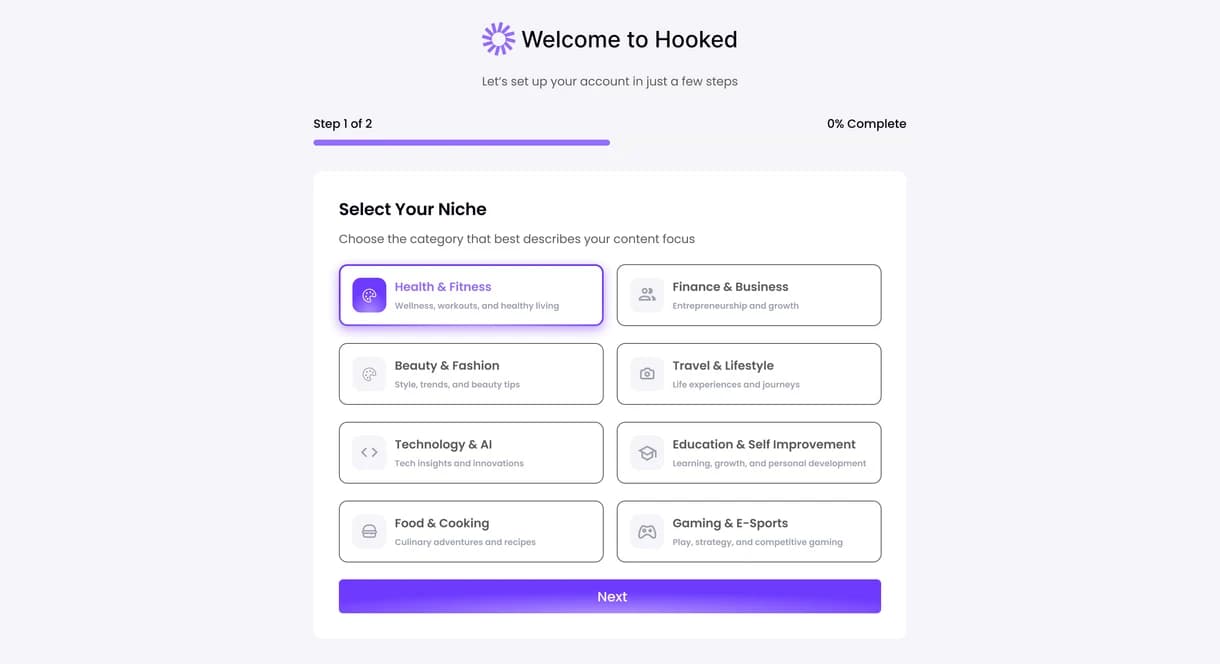
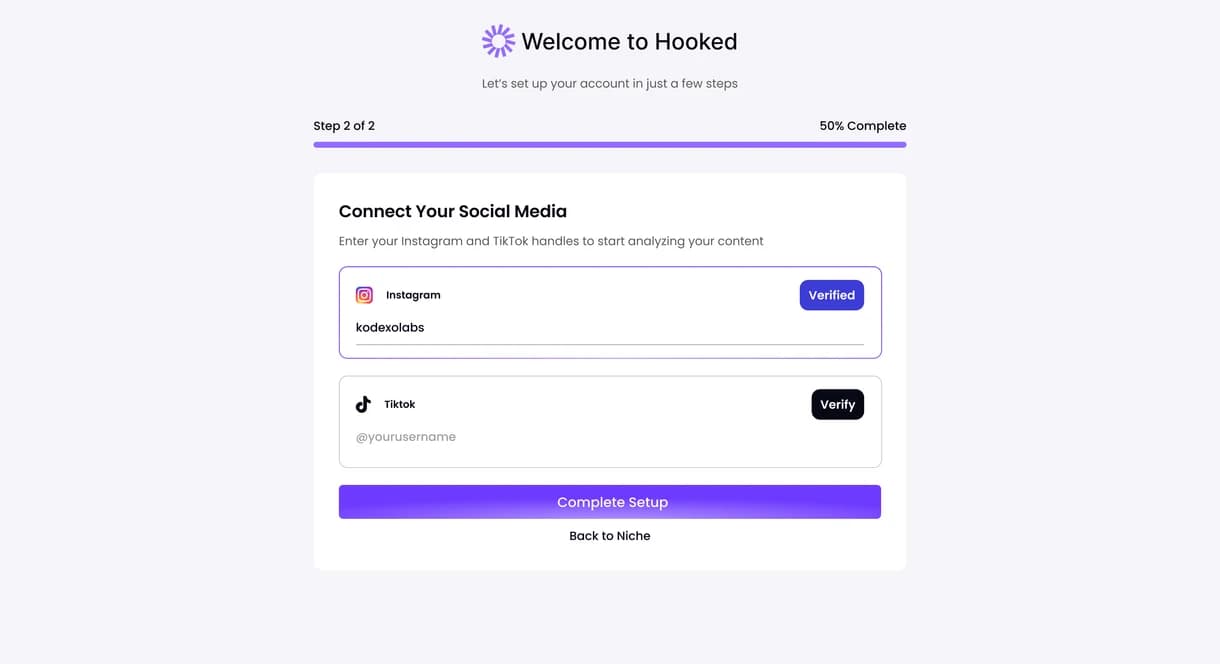
A creator signs up, picks the niche they publish in, and types an Instagram handle and a TikTok handle. Nothing else is asked. The handles are validated on entry and queued for collection immediately, so the first profile is building while they are still reading the screen.
From then on the platform does the collecting. It keeps their own posting record current, tracks the five or six creators they measure themselves against, watches what is climbing in their niche, and turns all of it into a short list of things to do next — a caption, an opening hook, a set of hashtags, and a real post that already went far.
Four Bills a Month, and Still No Answer to "Why Did That Flop?"
The specification opened with the creator's week, not with technology. Four things were costing them time and money, and nothing on the market fixed more than one at a time.
Six Working Parts, Each Answering a Question a Creator Asks Out Loud
Six screens, each built to answer one thing a creator asks out loud.
Every Number That Matters, One Platform at a Time
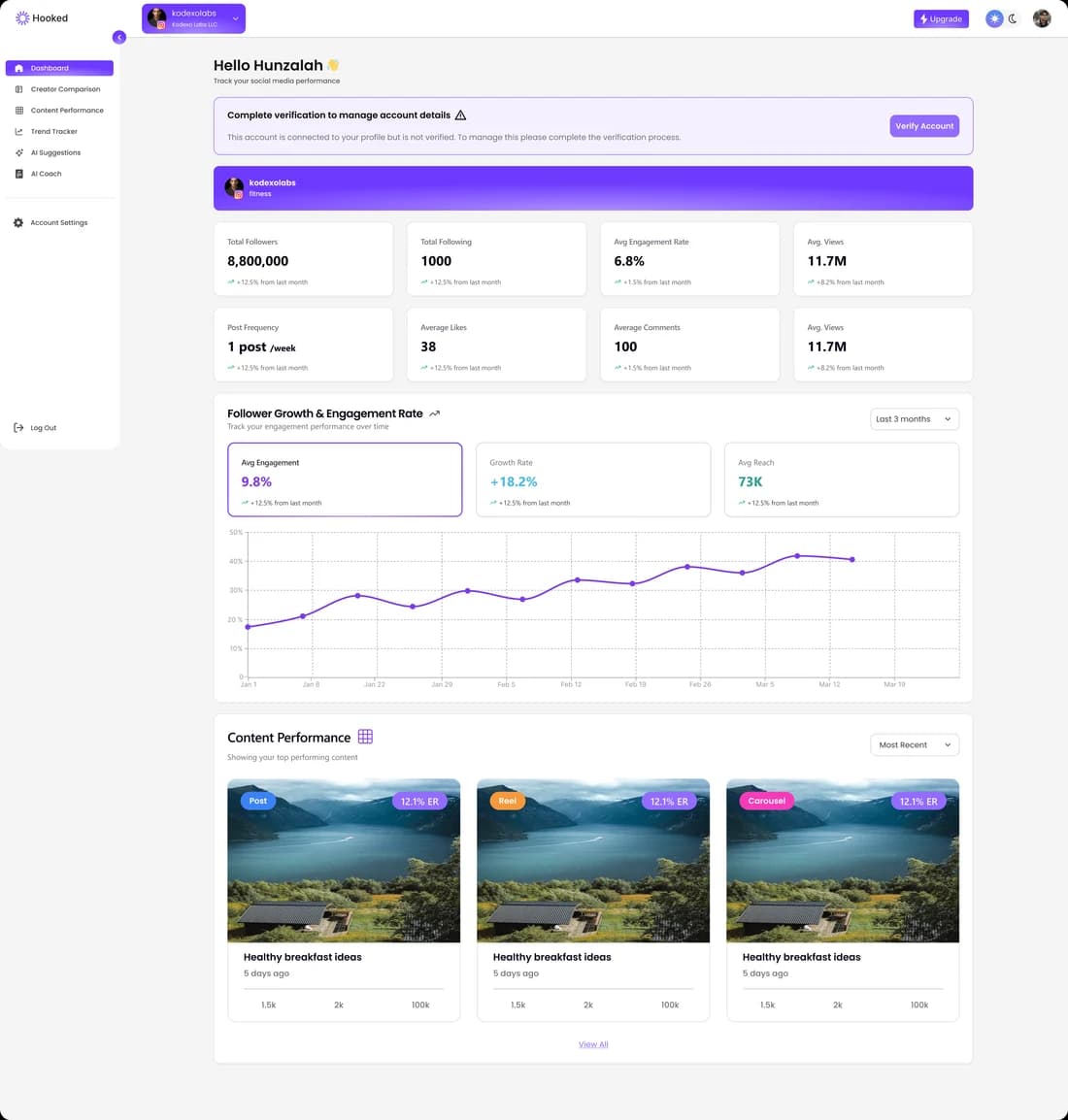
Followers, engagement rate, average views, posting frequency, likes and comments — each card with its week-over-week change, a growth curve behind them, and the creator's top content underneath.
Which Format Is Actually Carrying Them
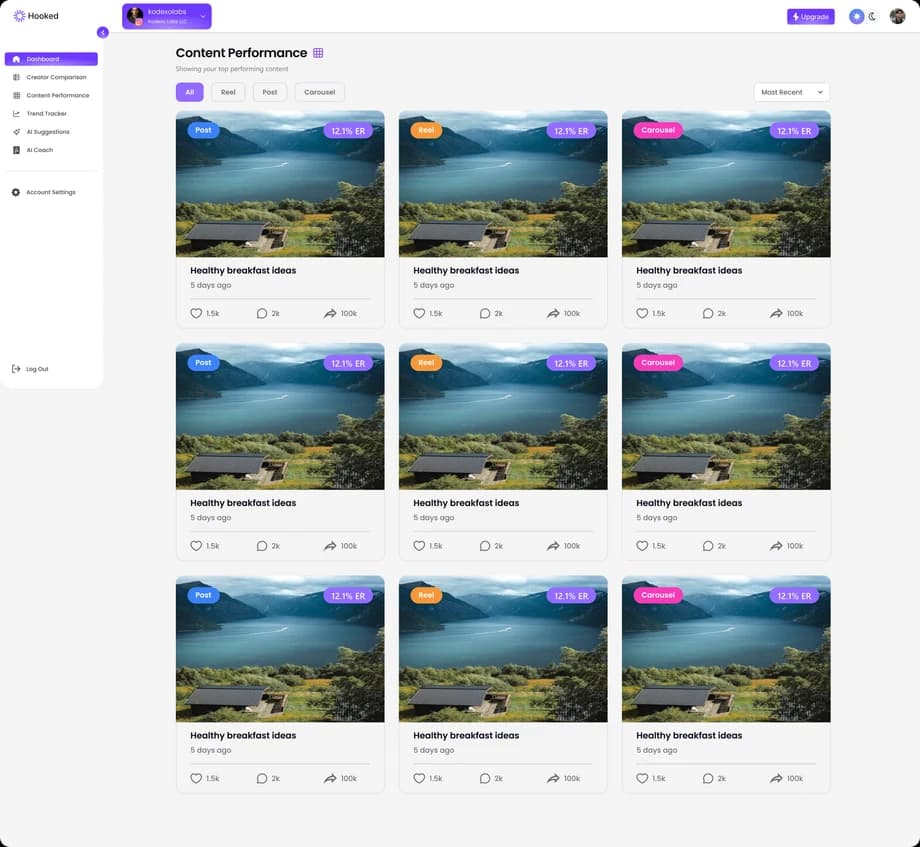
A 3×3 grid of the creator's own posts, each tagged Post, Reel, or Carousel and stamped with its engagement rate — the pattern of what earns attention shows up in seconds.
Five or Six Rivals, Tracked on a Schedule
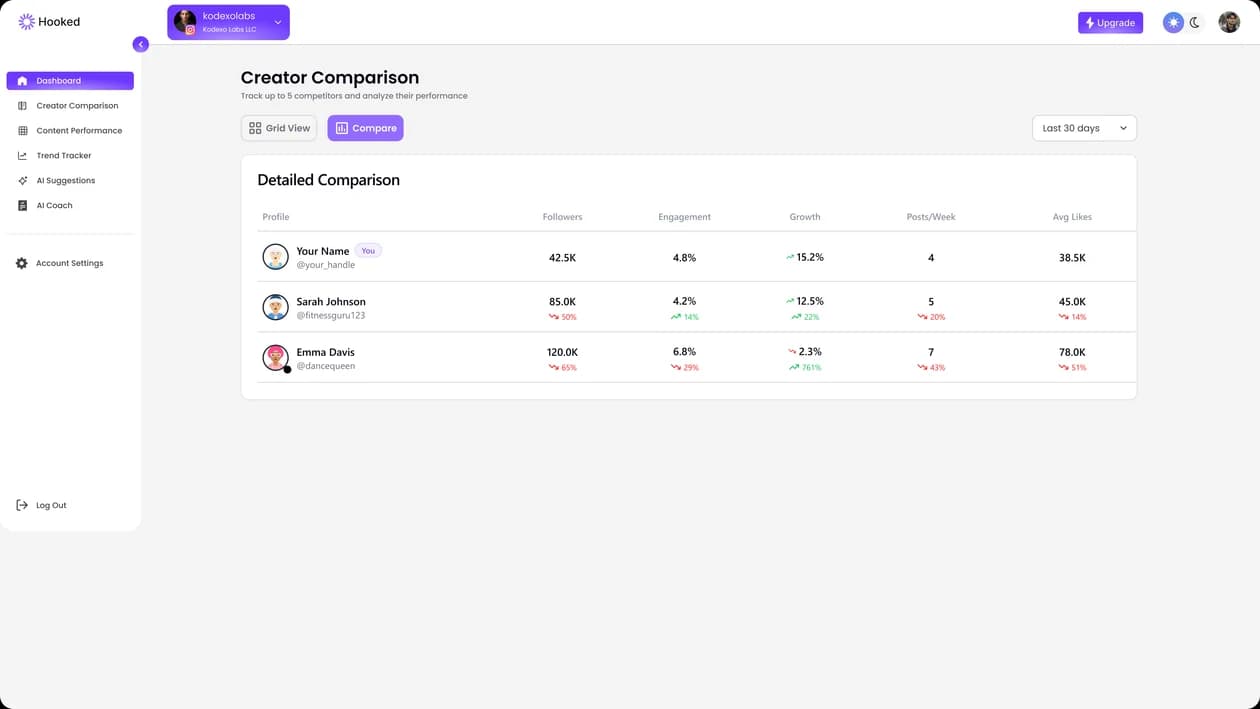
The creator adds 5-6 competitor handles. Cards give a quick read of followers, engagement, and growth; a table puts the creator's own row on top with every gap marked up or down.
A Finished Package, Not a Suggestion
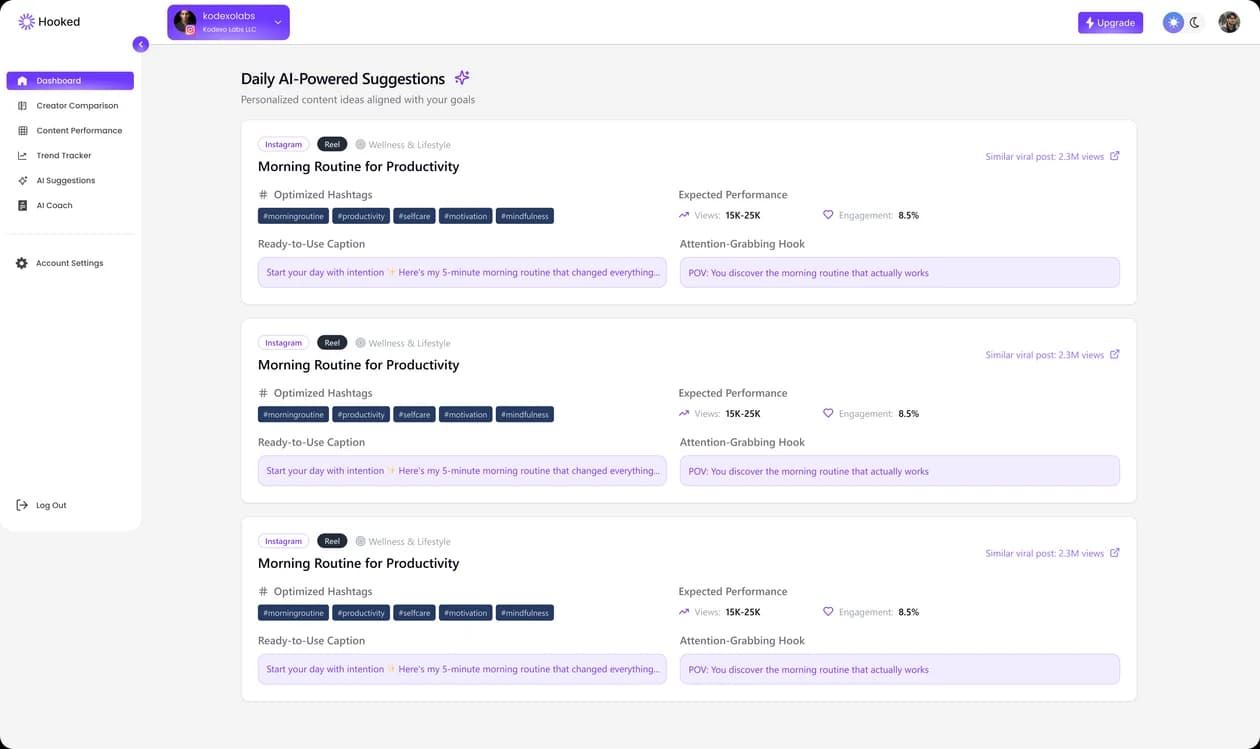
Each day: a caption ready to paste, an opening hook written for that platform, five to ten hashtags, a link to a post in the niche that already went far, and the range of views to expect.
A Coach That Has Already Read the Numbers
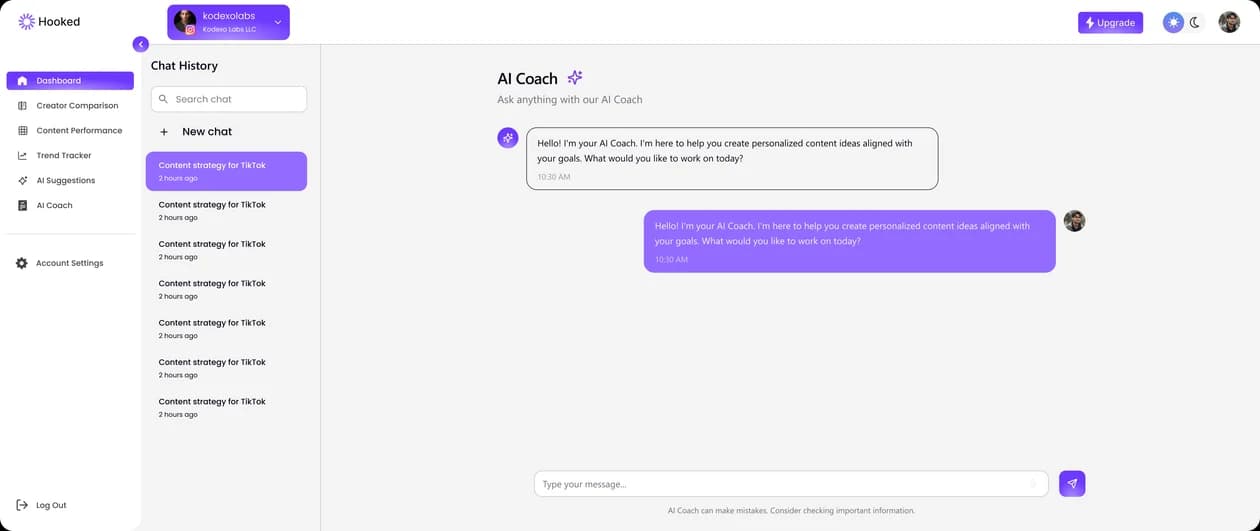
A chat the creator types into in their own words. It already knows their metrics, their rivals, and the week's trends. Conversations are saved, searchable, and picked up where they stopped.
Trial, Upgrade, Cancel — Without Emailing Support
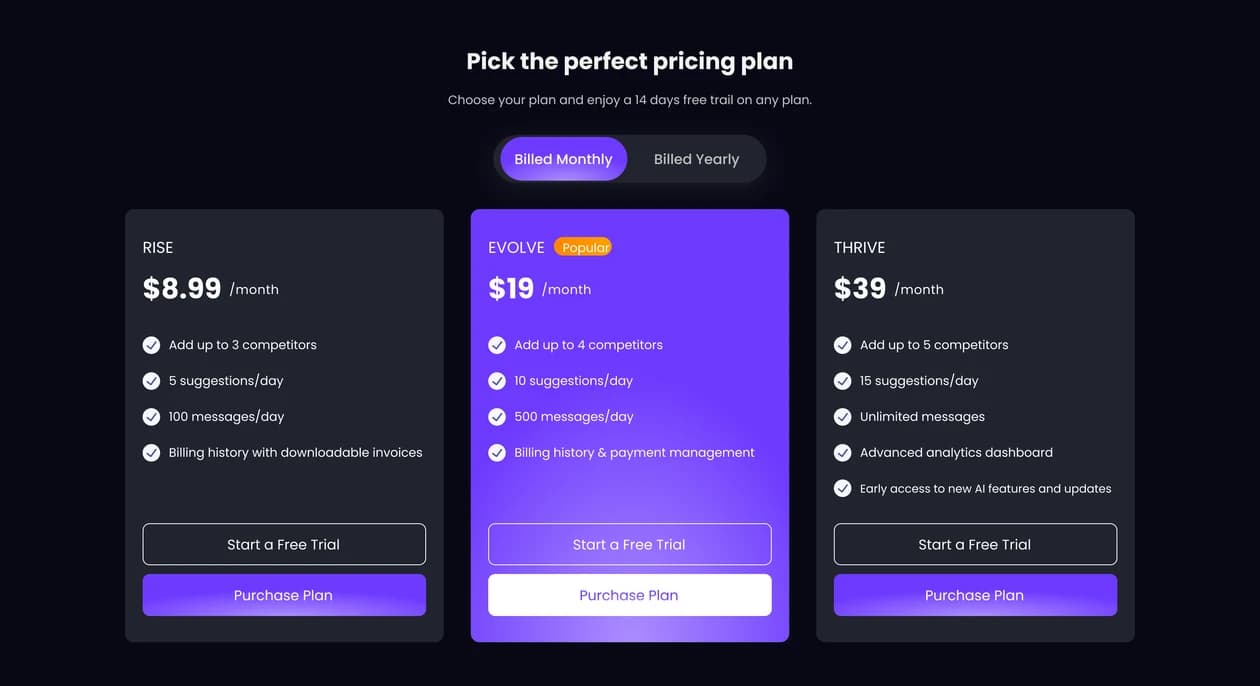
Tiers billed monthly or yearly, each opening with fourteen free days. Stripe owns the card data and its webhooks drive access — cancelling runs to the end of the period, and history stays readable.
From Two Handles to a Caption Worth Posting
Three kinds of data go in. One engine makes sense of them. A creator gets back exactly what to post, and why.
The Simple Machinery Behind It
Four jobs, done by four tools. Nothing exotic — just the right piece doing the one thing it's good at.
One Subscription, Half a Day Back Every Week
Each figure traces to a specific part of the build: the tools it replaces, the profiles it tracks on a schedule, or the recommendations grounded in the creator's own data.
What Founders Ask Before Building on Scraped Social Data
The questions that come up in almost every first call about creator analytics.
How Fresh Is the Data, Really?
A creator's own metrics refresh within the hour. Competitor profiles refresh weekly. Trends run on the fastest cycle the scrapers allow, and every trend on screen carries the time it was collected plus a countdown to the next update. Nothing is dressed up as live.
What Happens When a Scraper Goes Down?
Cached data is served with a notice, and jobs stay queued and retried. If regional trends are unavailable the feed falls back to global trends relevant to the niche and says so on the screen.
How Do You Keep the AI Bill Under Control?
Prompts are trimmed, similar questions are answered from a stored response, and monthly usage is tracked with alerts against a fixed allocation for OpenAI, Apify, AWS, and proxies.
Can It Invent Numbers?
Every recommendation is prompted with the creator's actual metrics, their tracked competitors, and collected trend data. Where the data is thin, the coach says so and offers a different approach rather than filling the gap.
What Happens to Someone Who Cancels?
Access runs to the end of the paid period, with the end date printed in the dashboard, and reactivation stays one click away. A refund cuts access immediately. Either way, historical data stays readable.
Will It Hold Under Real Traffic?
The MVP is sized for 100 to 500 concurrent creators, running in containers on Elastic Beanstalk with auto scaling on CPU and memory. Past roughly a thousand users the infrastructure gets reviewed rather than quietly stretched.
Where Prototypes Become Production Systems.
Twenty minutes with the team that built this. Bring the data your product already sits on, and leave with a straight answer on what it would take.
Related work


