Did you know that mobile app spending is projected to reach $270 billion by 2025, driven by emerging technologies like AI and IoT integration? This comprehensive guide explores the complete mobile app development process for 2025, covering everything from initial planning to successful app store launches. As businesses increasingly rely on mobile applications for customer engagement and digital transformation, understanding the mobile app development process has become crucial for success.
This guide provides a complete roadmap for mobile app development in 2025, covering modern processes, technologies, and best practices for businesses and developers.
What is the Mobile App Development Process: Understanding the 2025 Framework
The mobile app development process in 2025 is a systematic approach encompassing planning, design, development, testing, and deployment phases, enhanced by AI-driven tools and modern frameworks for faster, more efficient app creation.
The mobile app development process has evolved significantly in 2025, incorporating advanced methodologies and cutting-edge technologies to meet the growing demands of modern businesses. This comprehensive framework combines traditional software development principles with mobile-specific considerations, ensuring optimal user experiences across all devices and platforms.
The Seven Essential Phases of Mobile Application Development
UI/UX Design Phase – User interface design, user experience optimization, and prototype creation
Development Phase – Frontend development, backend development, and API integration
Quality Assurance Phase – Performance testing, security testing, and user acceptance testing
Deployment Phase – App store submission and release management
Post-Launch Phase – Monitoring, updates, and maintenance
Analytics & Optimization – User behavior analysis and continuous improvement
Stay Updated—Join Our Newsletter!
Newsletter
Don’t miss on the latest updates in the world of AI. We dispatch custom reports and newsletters every week, with forecasts on trends to come. Join our community now!
Mobile App Development Lifecycle vs Traditional Software Development
Shorter development cycles with agile methodologies
Platform-specific considerations for iOS and Android
App store guidelines and approval processes
Mobile-first user experience design principles
Aspect
Mobile Development
Traditional Software
Development Time
3-8 months
6-18 months
Platform Focus
iOS, Android, Cross-platform
Web, Desktop
User Interface
Touch-optimized
Mouse/keyboard
Distribution
App stores
Direct installation
According to the latest report, mobile app development projects in 2025 show 35% faster completion rates compared to traditional software projects, primarily due to enhanced development frameworks and AI-assisted coding tools.
How to Develop a Mobile App Step by Step: The 2025 Roadmap
Developing a mobile app in 2025 involves strategic planning, choosing the right development approach, designing user-centric interfaces, coding with modern frameworks, rigorous testing, and strategic app store optimization.
The step-by-step mobile app development process in 2025 requires a structured approach that balances speed, quality, and innovation. This roadmap ensures your app meets modern standards while delivering exceptional user experiences.
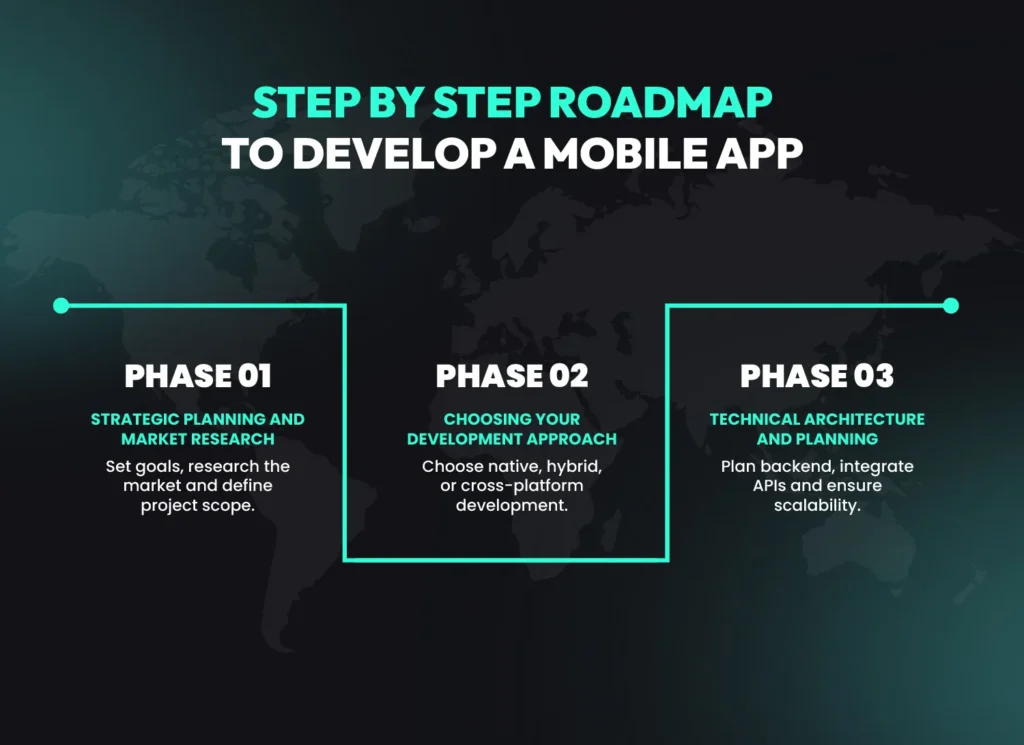
Early phases of the mobile app development process: planning, choosing approach and technical setup.
Phase 1: Strategic Planning and Market Research
Define app objectives and target audience
Conduct competitive analysis and market validation
Create detailed project requirements and specifications
Establish budget and timeline parameters
Our software consulting team helps businesses navigate this crucial phase by providing comprehensive market analysis and strategic guidance.
Phase 2: Choosing Your Development Approach
Native App Development
Platform-specific development offering superior performance and full access to device features. Native apps provide the best user experience but require separate development for iOS and Android platforms.
Hybrid Apps
Cost-effective solutions combining web technologies with native containers. This approach reduces development time while maintaining reasonable performance for business applications.
Cross-platform Apps
Single codebase deployment across multiple platforms using frameworks like React Native and Flutter. This approach offers optimal balance between cost and performance.
Phase 3: Technical Architecture and Planning
Backend development strategy and database selection
API design and third-party services integration
Security framework implementation
Scalability and performance considerations
Step-by-Step Development Roadmap
Week 1-2: Requirements gathering and technical specification
Week 3-4: UI/UX design and prototype development
Week 5-12: Core development and feature implementation
Week 13-14: Testing and quality assurance
Week 15-16: App store preparation and launch
Based on our experience at Kodexo Labs in New York, successful mobile app projects in 2025 require early integration of AI capabilities and consideration of emerging technologies like AR/VR to stay competitive in the evolving app economy.
Modern Development Approaches: Agile, Native, and Cross-Platform Solutions
Modern mobile app development in 2025 offers multiple approaches including agile native development, hybrid solutions, and cross-platform frameworks, each suited for different business requirements and technical constraints.
Agile Mobile App Development Process
Sprint-based development cycles
Continuous integration and deployment
Regular stakeholder feedback and iteration
Faster time-to-market with MVP approach
The agile methodology has become the standard for mobile app development, with research showing that 82% of successful mobile projects use agile practices in 2025.
Native vs Cross-Platform Development
Aspect
Native Development
Cross-Platform
Performance
Excellent
Good to Very Good
Development Cost
Higher
Lower
Time to Market
Longer
Faster
Platform Features
Full Access
Limited Access
Code Reusability
None
High (70-90%)
Native Mobile Apps
Native apps provide superior performance and user experience by utilizing platform-specific programming languages and features. They offer full access to device capabilities and seamless integration with operating systems.
Cross-Platform Development
Cross-platform frameworks like React Native and Flutter enable developers to create applications that run on multiple platforms using a single codebase, significantly reducing development time and costs.
Enterprise Mobile App Development Process
Enhanced security requirements and compliance
Integration with existing enterprise systems
Scalability for large user bases
Custom app development with business logic
Our custom product development services specialize in creating enterprise-grade mobile applications that meet complex business requirements and security standards.
Essential Technologies and Frameworks for 2025 Mobile Development
Mobile app development in 2025 leverages advanced frameworks like React Native and Flutter, AI-powered UI/UX design tools, cloud backend services, and emerging technologies for enhanced user experiences.
Leading App Development Frameworks
React Native: Popular for cross-platform mobile applications with JavaScript
Flutter: Google’s UI toolkit for creating native experiences across platforms
Microsoft Xamarin: Enterprise-focused development platform with C# support
Native iOS/Android: Platform-specific development using Swift and Kotlin
UI/UX Design and User Interface Trends
AI-powered design assistance and automation
Voice user interfaces and conversational design
Gesture-based navigation and interactions
Accessibility-first design principles
Dark mode and adaptive interfaces
Our product design team incorporates these cutting-edge trends to create intuitive and engaging mobile experiences that resonate with modern users.
Backend Development and Infrastructure
Cloud-native architecture and microservices
API-first development approach
Database engines optimization for mobile
Real-time data synchronization
Edge computing for improved performance
Integration with Modern Technologies
Technology
Application
Benefits
Machine Learning
Predictive analytics
Personalized experiences
Internet of Things
Device connectivity
Smart integrations
Augmented Reality
Immersive experiences
Enhanced engagement
Payment Gateways
Transaction processing
Secure payments
Our AI integration services help businesses incorporate machine learning capabilities into their mobile applications, creating smarter and more responsive user experiences.
Quality Assurance and Testing: Ensuring App Excellence in 2025
Modern mobile app testing in 2025 combines automated testing frameworks, AI-powered quality assurance, comprehensive security testing, and performance optimization to ensure flawless user experiences across all devices.
Comprehensive Testing and Quality Assurance Strategy
Performance Testing: Load testing and optimization for various device configurations
Security Testing: Vulnerability assessment and data protection validation
Usability Testing: User experience validation and accessibility compliance
Compatibility Testing: Cross-device and platform functionality verification
Modern Testing Tools and Methodologies
Apple TestFlight
iOS beta testing platform enabling developers to distribute pre-release versions to internal and external testers for comprehensive feedback collection and bug identification.
Firebase Crashlytics
Real-time crash reporting and analytics tool providing detailed insights into app stability, performance issues, and user impact metrics for both iOS and Android applications.
Automated Testing Frameworks: Continuous integration testing with tools like Appium and Espresso
AI-Powered Testing: Intelligent test case generation and anomaly detection
Quality Metrics and Performance Standards
Metric
Standard
Impact
App Load Time
< 3 seconds
User retention
Crash Rate
< 0.1%
App store ranking
Memory Usage
< 200MB
Device performance
Battery Consumption
Minimal
User satisfaction
Research from Google indicates that apps meeting these quality standards achieve 51% higher user retention rates and significantly better app store visibility.
Platform-Specific Development: Android, iOS, and Beyond
Platform-specific development in 2025 requires understanding unique iOS and Android ecosystems, following platform guidelines, and optimizing for specific user behaviors and technical capabilities of each operating system.
Ready to Build? Get a Free Mobile App Development Roadmap Tailored for 2025
Let’s Talk
Our experts will analyze your idea, outline the right process and give you a personalized roadmap to turn your vision into a successful app in 2025.
Mobile app development in 2025 is revolutionized by generative AI integration, advanced AR/VR capabilities, IoT connectivity, and edge computing, creating more intelligent and immersive user experiences.
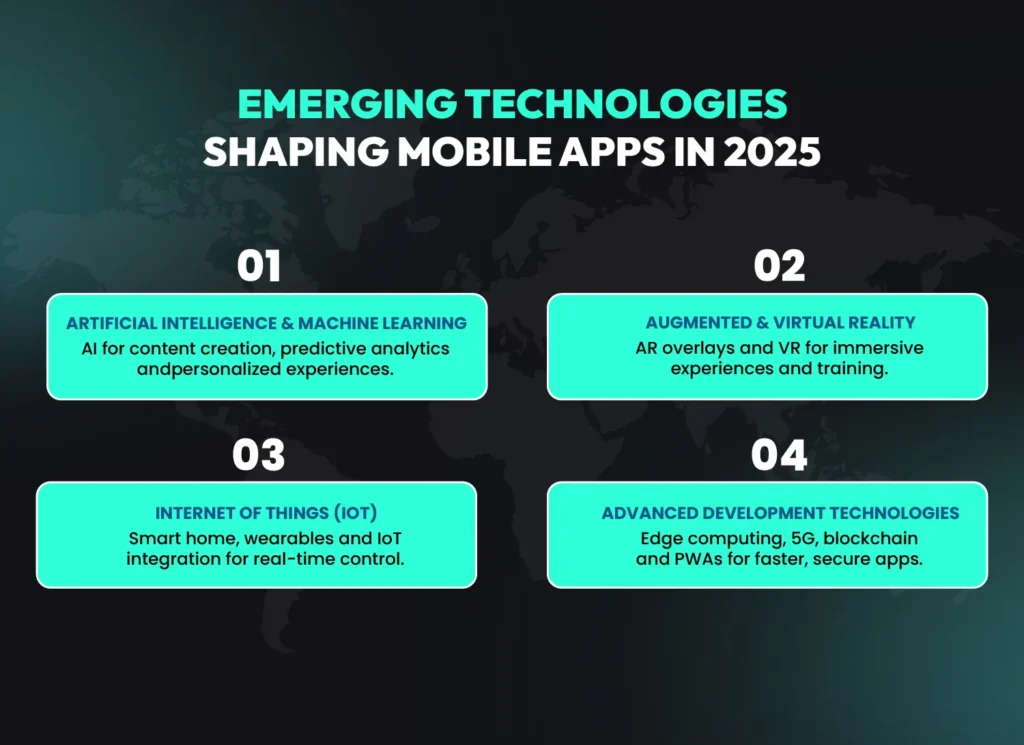
Key technologies shaping mobile apps: AI & ML, AR/VR, IoT, 5G, blockchain and PWAs.
Artificial Intelligence and Machine Learning Integration
Generative AI
AI-powered content creation and intelligent user assistance capabilities enabling apps to generate personalized content, automate responses, and provide contextual recommendations based on user behavior and preferences.
Predictive Analytics: User behavior prediction and personalization engines
Natural Language Processing: Advanced chatbots and voice interfaces
Computer Vision: Image recognition and augmented reality features
Our generative AI development services help businesses integrate cutting-edge AI capabilities into their mobile applications, creating more intelligent and responsive user experiences.
Augmented and Virtual Reality Applications
Technology
Applications
Industry Impact
AR Technology
Real-world overlays
Retail, Education, Gaming
Virtual Reality
Immersive experiences
Training, Entertainment
Mixed Reality
Blended environments
Industrial, Healthcare
WebXR
Browser-based XR
Accessible VR/AR
Internet of Things and Connected Devices
Smart home integration and control applications
Wearable device connectivity and health monitoring
Industrial IoT applications for process optimization
Real-time data synchronization across device ecosystems
Advanced Development Technologies
Edge Computing
Processing data closer to users reduces latency and improves performance, enabling real-time features and reducing server load for mobile applications requiring instant responsiveness.
5G Integration: Enhanced connectivity enabling high-bandwidth real-time features
Blockchain: Secure transactions and decentralized application capabilities
Progressive Web Applications: App-like experiences through web browsers
Industry analysis from our AI development projects indicates that apps incorporating AI-driven personalization and AR features see 40% higher user engagement rates, making these technologies essential for competitive mobile applications in 2025.
Business Considerations: Cost, Timeline, and Team Selection
Mobile app development costs in 2025 vary widely based on complexity, platform choice, and feature requirements, with typical projects ranging from $50,000 to $500,000 and timelines of 4-12 months depending on scope.
How Much Does it Cost to Develop a Mobile App in 2025?
MVP Development: 3-4 months for basic functionality and core features
Full-Featured App: 6-12 months for comprehensive business solutions
Enterprise Applications: 12-18 months for complex systems with integrations
According to Clutch research, the average mobile app development timeline has decreased by 25% in 2025 due to improved development tools and frameworks.
How to Choose the Right Mobile App Development Company
Portfolio Review: Evaluate previous work and industry experience
Technical Expertise: Assess platform knowledge and modern framework proficiency
Project Management: Verify agile methodologies and communication processes
Post-Launch Support: Ensure maintenance and update capabilities
Client References: Review testimonials and detailed case studies
Building Your Development Team
Role
Responsibilities
Skills Required
iOS Developer
Native iOS development
Swift, Xcode, iOS SDK
Android Developer
Native Android development
Kotlin, Android Studio
UI/UX Designer
Interface and experience design
Figma, user research
Project Manager
Timeline and resource coordination
Agile, communication
QA Engineer
Testing and quality assurance
Automated testing tools
Our dedicated development team service provides access to experienced professionals who specialize in modern mobile app development technologies and methodologies.
App Store Launch and Monetization Strategies for 2025
Successful app launches in 2025 require strategic app store optimization, multi-platform distribution, diverse monetization models, and comprehensive marketing strategies to achieve sustainable growth in the competitive app economy.
App Store Submission and Approval Process
Google Play Console: Android app submission with automated pre-launch testing
Apple App Store: iOS submission requiring human review and guideline compliance
App Store Guidelines: Content policy and technical requirement adherence
Global Distribution: International market considerations and localization
App Store Optimization (ASO) Strategies
ASO Element
Impact
Best Practices
App Title
High
Include primary keywords
Description
Medium
Feature benefits, not just features
Screenshots
High
Show key features in action
Reviews & Ratings
Very High
Encourage satisfied users to review
Modern App Monetization Models
Freemium: Basic free features with premium upgrade options
Subscription: Recurring revenue models for ongoing value delivery
In-App Purchases: Virtual goods and feature unlocks
Advertising: Banner, interstitial, and rewarded video ads
Enterprise Licensing: B2B software solutions and custom deployments
Post-Launch Marketing and Growth
User acquisition campaigns and retention strategies
Social media marketing and influencer partnerships
Content marketing and search engine optimization
Community building and customer engagement programs
Analytics tracking and performance optimization
Our portfolio includes successful launches like Decima mobile app, demonstrating our expertise in creating market-ready applications that achieve strong user adoption and retention.
Regional Trends and Market Variations in Mobile App Development
Mobile app development strategies in 2025 vary significantly across regions due to infrastructure maturity, regulatory frameworks, user preferences, and market conditions, requiring localized approaches for global success.
Expanding Into Global Markets? Let’s Build Your Roadmap Together
Let’s Talk
Our team will help you navigate regulations, user preferences and technical challenges to create a tailored app development roadmap for global success.
Enhanced security, data protection, government approval processes
Our experience with projects across different markets shows that successful global apps adapt their core functionality to meet regional preferences while maintaining consistent brand experience, with localization efforts contributing to 60% higher market penetration rates.
At a Glance: Key Takeaways
Strategic Planning: Thorough market research and technical planning are crucial for successful mobile app development
Technology Choice: Select development approach (native, hybrid, cross-platform) based on business requirements and budget
AI Integration: Modern apps require AI capabilities for personalization and competitive advantage
Quality Assurance: Comprehensive testing ensures optimal performance across all devices and platforms
Budget Planning: Costs range from $50,000 to $500,000+ depending on complexity and requirements
Timeline Expectations: Development timelines span 3-12 months based on project scope and team expertise
Post-Launch Strategy: App store optimization and marketing are essential for user acquisition and retention
Frequently Asked Questions
What is custom mobile app development and why choose it?
Custom mobile app development creates tailored software applications designed specifically for your business needs, target audience, and unique requirements. Unlike template-based solutions, custom apps offer complete control over functionality, design, user experience, and integration capabilities, ensuring optimal performance and competitive differentiation in your market.
How long does it take to develop a mobile app in 2025?
Mobile app development timelines in 2025 typically range from 3-4 months for simple MVP apps to 12-18 months for enterprise-level applications. Factors affecting timeline include app complexity, platform choice (native vs. cross-platform), team size, feature requirements, testing phases, and integration needs with existing systems.
Is React Native good for mobile app development in 2025?
React Native remains an excellent choice for mobile app development in 2025, offering cross-platform compatibility, faster development cycles, and cost-effective solutions. It’s particularly suitable for business apps, social platforms, and e-commerce applications, though native development may be preferred for performance-critical apps or platform-specific features.
What is cross-platform mobile app development?
Cross-platform mobile app development creates applications that function across multiple operating systems (iOS, Android) using a single codebase. This approach reduces development time and costs while maintaining consistent user experience across platforms, making it ideal for businesses targeting diverse mobile audiences efficiently.
How to choose the right mobile app development company in 2025?
Select a mobile app development company based on their portfolio relevance, technical expertise in modern frameworks, agile project management practices, client testimonials, post-launch support services, and understanding of 2025 trends like AI integration, security compliance, and emerging technologies for future-proof solutions.
What does a mobile app development roadmap look like for 2025 projects?
A 2025 mobile app development roadmap includes strategic planning, market research, UI/UX design, agile development sprints, comprehensive testing, app store optimization, and post-launch analytics. Modern roadmaps emphasize AI integration, security compliance, cross-platform compatibility, and continuous iteration based on user feedback and performance metrics.
Stay Updated—Join Our Newsletter!
Newsletter
Don’t miss on the latest updates in the world of AI. We dispatch custom reports and newsletters every week, with forecasts on trends to come. Join our community now!
Conclusion: Navigating Mobile App Development Success in 2025
Mobile app development in 2025 requires strategic planning, modern technology adoption, and expert execution to succeed in an increasingly competitive and sophisticated app economy.
The mobile app development landscape in 2025 presents unprecedented opportunities for businesses willing to embrace modern technologies and user-centric design principles. From AI-powered personalization to immersive AR experiences, successful mobile applications must integrate cutting-edge features while maintaining exceptional user experiences across all platforms and devices.
This comprehensive guide has outlined the essential steps, considerations, and strategies needed to navigate the complex mobile app development process successfully. Whether you’re planning a simple business app or a sophisticated enterprise solution, understanding the modern development lifecycle, technology choices, and market dynamics is crucial for achieving sustainable success.
Expert Partnership with Kodexo Labs: As the mobile app development industry continues evolving rapidly, partnering with experienced professionals becomes increasingly valuable. Kodexo Labs’ expertise in AI integration, custom software development, and modern mobile technologies positions businesses to capitalize on emerging opportunities while avoiding common pitfalls in the development process.
The future of mobile app development lies in intelligent, adaptive applications that seamlessly integrate with users’ digital ecosystems. By following the strategies outlined in this guide and staying informed about emerging trends, businesses can create mobile applications that not only meet current user expectations but also anticipate future technological developments and market shifts.
Ready to start your mobile app development journey? Contact our team to discuss how we can help bring your vision to life with cutting-edge technologies and proven development methodologies that deliver results in the competitive 2025 mobile app market.
Syed Ali Hasan Shah, a content writer at Kodexo Labs with knowledge of data science, cloud computing, AI, machine learning, and cyber security. In an effort to increase awareness of AI’s potential, his engrossing and educational content clarifies technical challenges for a variety of audiences, especially business owners.
Hear from our clients and why 50+ businesses
trust Kodexo Labs
Kodexo Labs has delivered a fully functional MVP on time, and testers
reported faster check-ins after the product launch. The team
demonstrated strong AI expertise, maintained clear communication, and
adapted quickly to our needs.
Annalisa Signorelli
Founder & CEO, Pet-X Solutions
AWARDS
Share Your Requirements to help our experts understand your business objectives and create your customized plan.
By providing a telephone number and submitting this form, you agree to receive SMS text messages from Kodexo Labs. Message and Data Rates may apply. Message frequency may vary. You can STOP messaging by sending STOP and get more help by sending HELP. See our privacy policy.
Trusted by Global Brands
Cookies Notice
By continuing to browse this website you consent to our use of cookies in accordance with our cookies policy.
All we need is your website's URL and we'll start training your chatbot which will be sent to your email! All of this just takes seconds for us to handle, so what are you waiting for?