
- Client
- VitalsConnect
- Industry
- Healthcare & Clinical Diagnostics
- What we built
- AI Clinical Decision-Support Platform With EMR Sync
- Who uses it
- Doctors, Admins, and Super Admins
Case Study · AI Clinical Decision Support
Doctors Get a Second Opinion Before the Patient Ever Sees the Result.
VitalsConnect is the AI-powered diagnostic platform Kodexo Labs built for healthcare providers, with an initial focus on the African healthcare market. A doctor describes symptoms or attaches an X-ray, then receives a confidence-scored assessment to approve, edit, or reject, while OpenEMR stays in sync.
- 6 hrs/mo
- Admin time reclaimed
- 15%
- Fewer intake errors
- 3 weeks
- Faster network rollout
01 · Overview
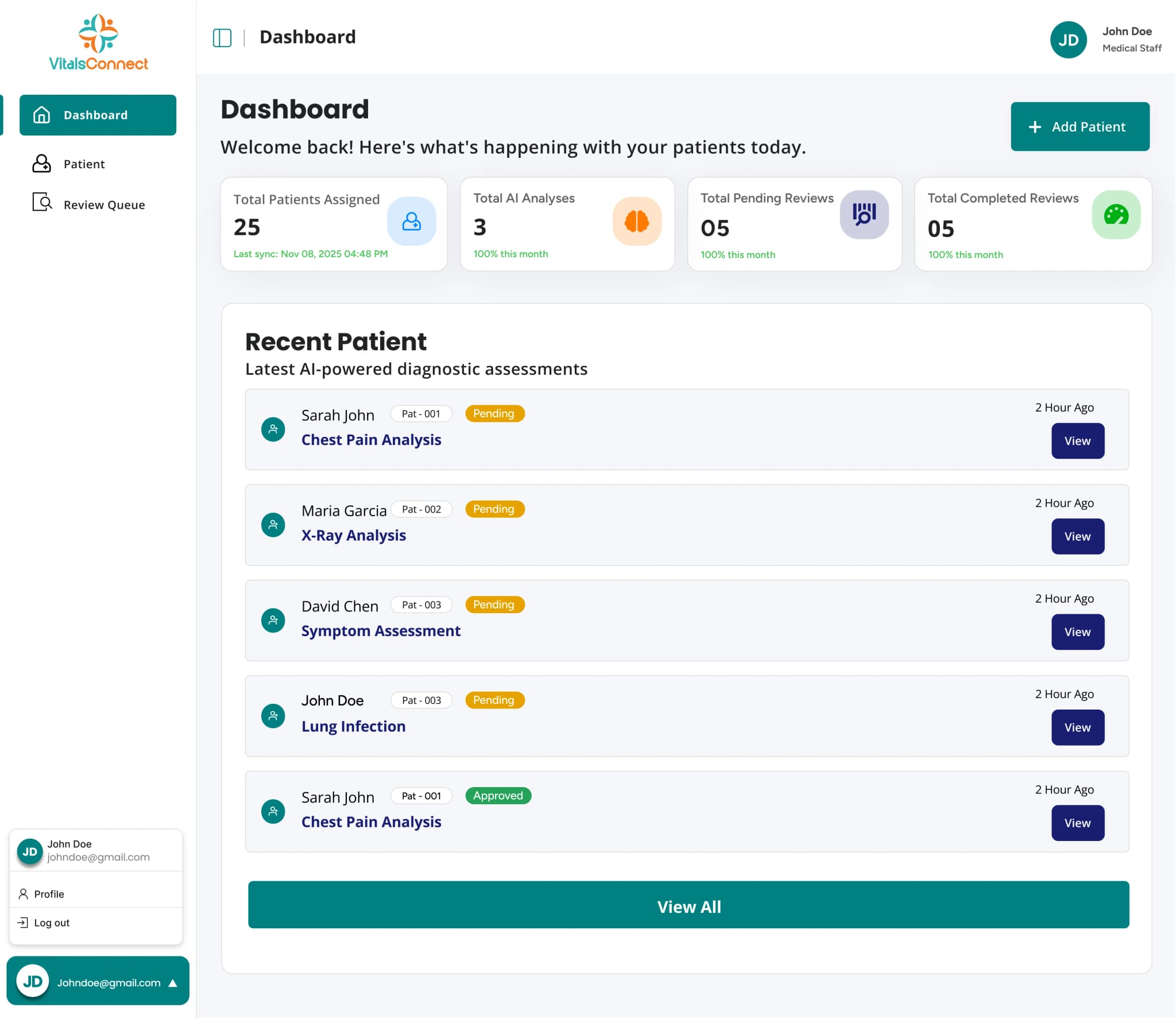
One Platform for the Diagnosis, the Record, and the Review
A doctor opens a patient, types or speaks the symptoms, and attaches imaging where needed. VitalsConnect returns a most-likely condition, confidence score, ranked alternatives, and recommended next step—an answer the doctor edits and approves before anything reaches the chart.
- Built for
- Three access levels: Doctor, Admin, and Super Admin, each scoped to what it needs to do.
- Runs on
- Next.js, FastAPI, and MongoDB, hosted on AWS with two-way OpenEMR sync.
- Held to
- HIPAA-compliant handling, with explainable AI answers rather than a black box.
02 · The Problem
An AI Opinion Nobody Can Explain Is Not a Diagnosis
Providers wanted AI-assisted diagnosis without losing the clinician’s final word or their compliance posture. Five gaps kept the idea on the whiteboard.
01
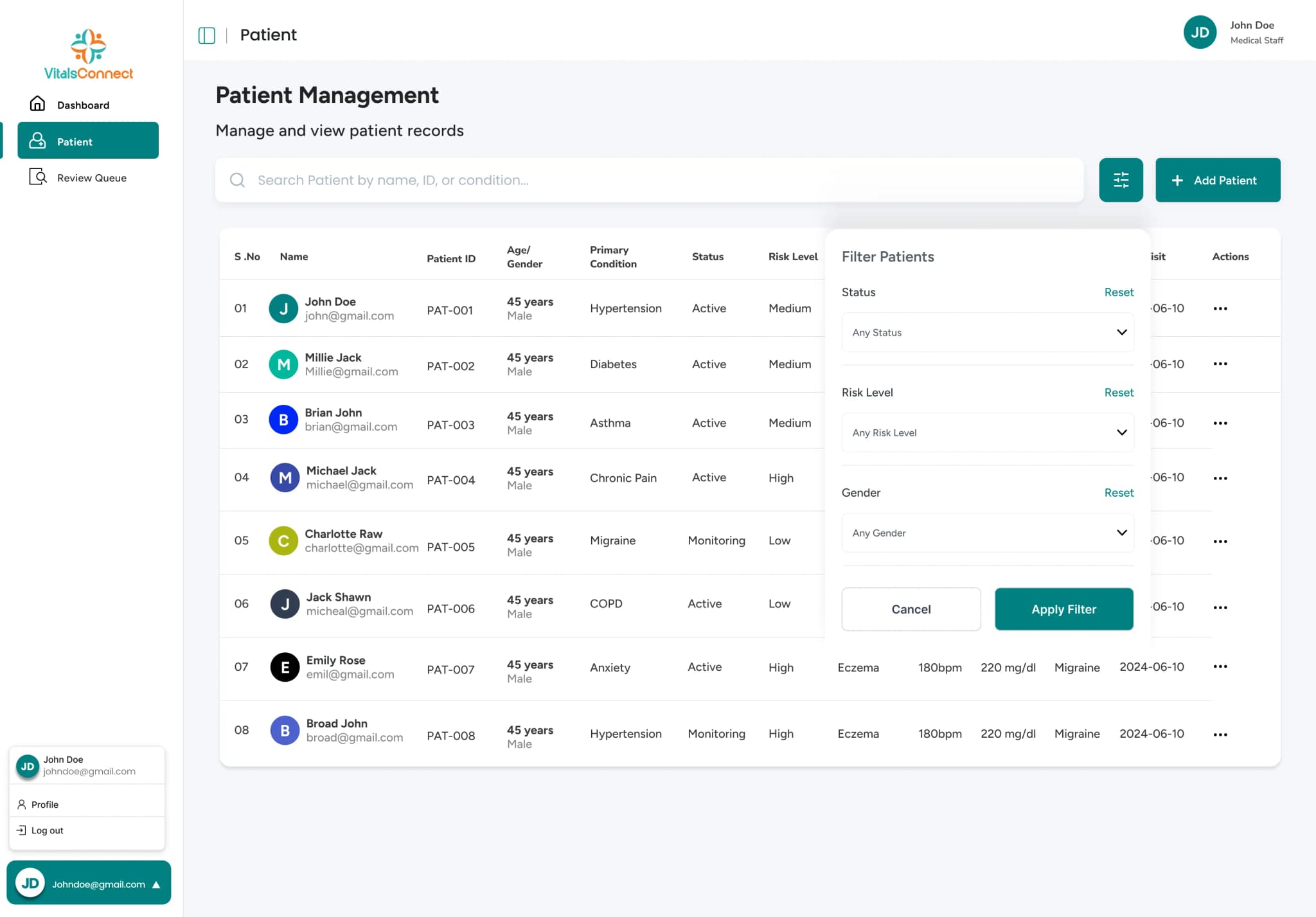
A Symptom Note Doesn't Turn Into a Diagnosis by Itself
Symptoms, images, and history needed to be read together and returned as a reviewable opinion, not a verdict.
02
Every Record Lived in Two Places
The EMR and everywhere else were updated separately by hand, drifting further apart with every new patient.
03
“Trust the AI” Isn’t a HIPAA Policy
Sensitive data needed encryption, anonymization before analysis, and an audit trail for every login and report.
04
Typing Notes Loses What the Patient Actually Said
Manual transcription during intake introduced errors that carried straight into the medical record.
05
A New Clinic Should Not Mean Rebuilding the Wiring
Every provider network needed a scalable connection into the EMR, not a bespoke integration.
Swipe →
03 · The Solution
Seven Parts, One Workflow From Symptom to Signed-Off Diagnosis
A symptom becomes a reviewable diagnosis without the doctor ever leaving the patient’s chart.
01 · AI Clinical Insight
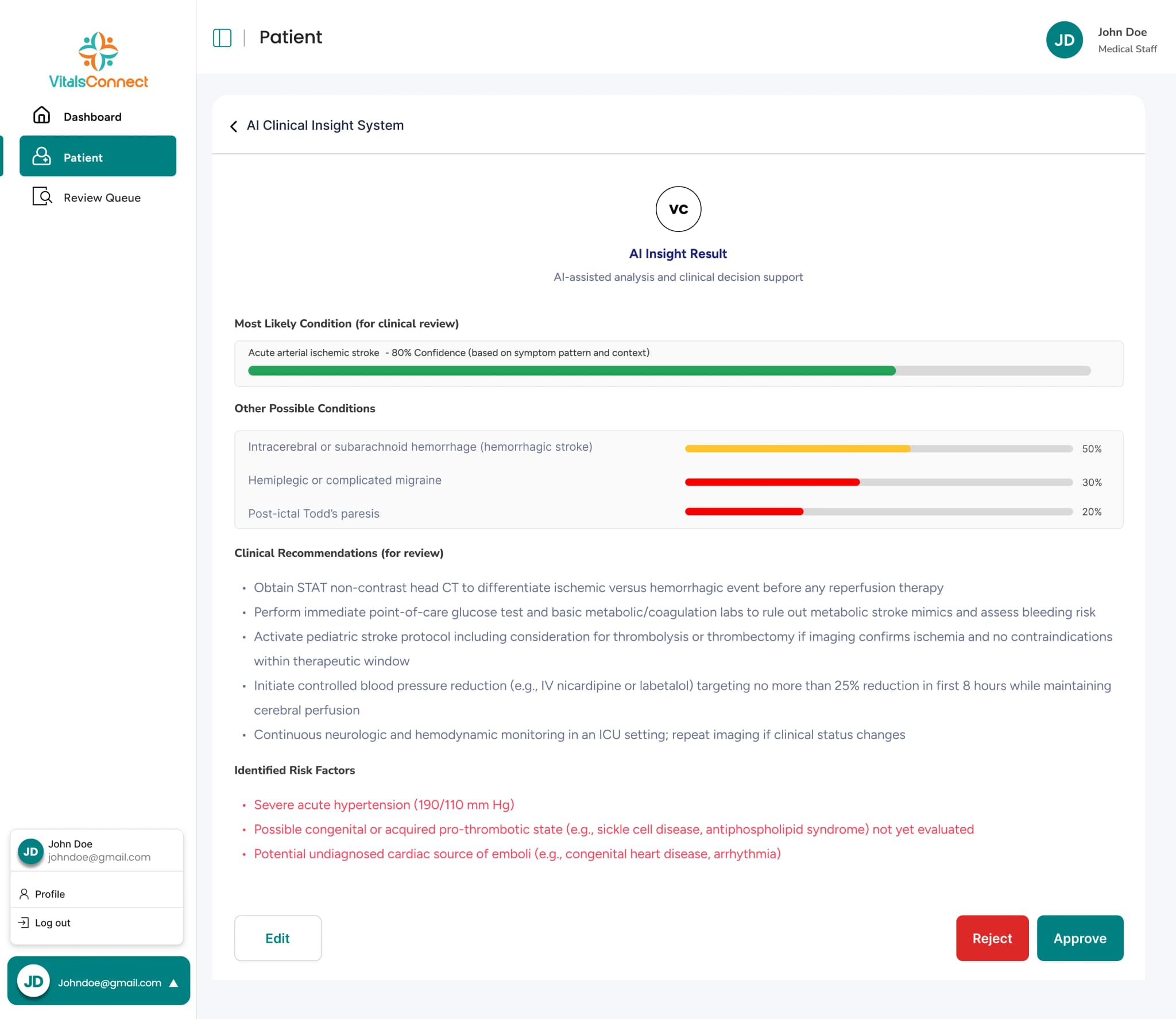
Every AI Answer Comes With Its Reasoning
The AI reads the symptoms and images, then shows its best guess, confidence, and alternatives. A doctor reviews the reasoning and approves or overrules it—nothing ships unexplained.
02 · Voice Intake
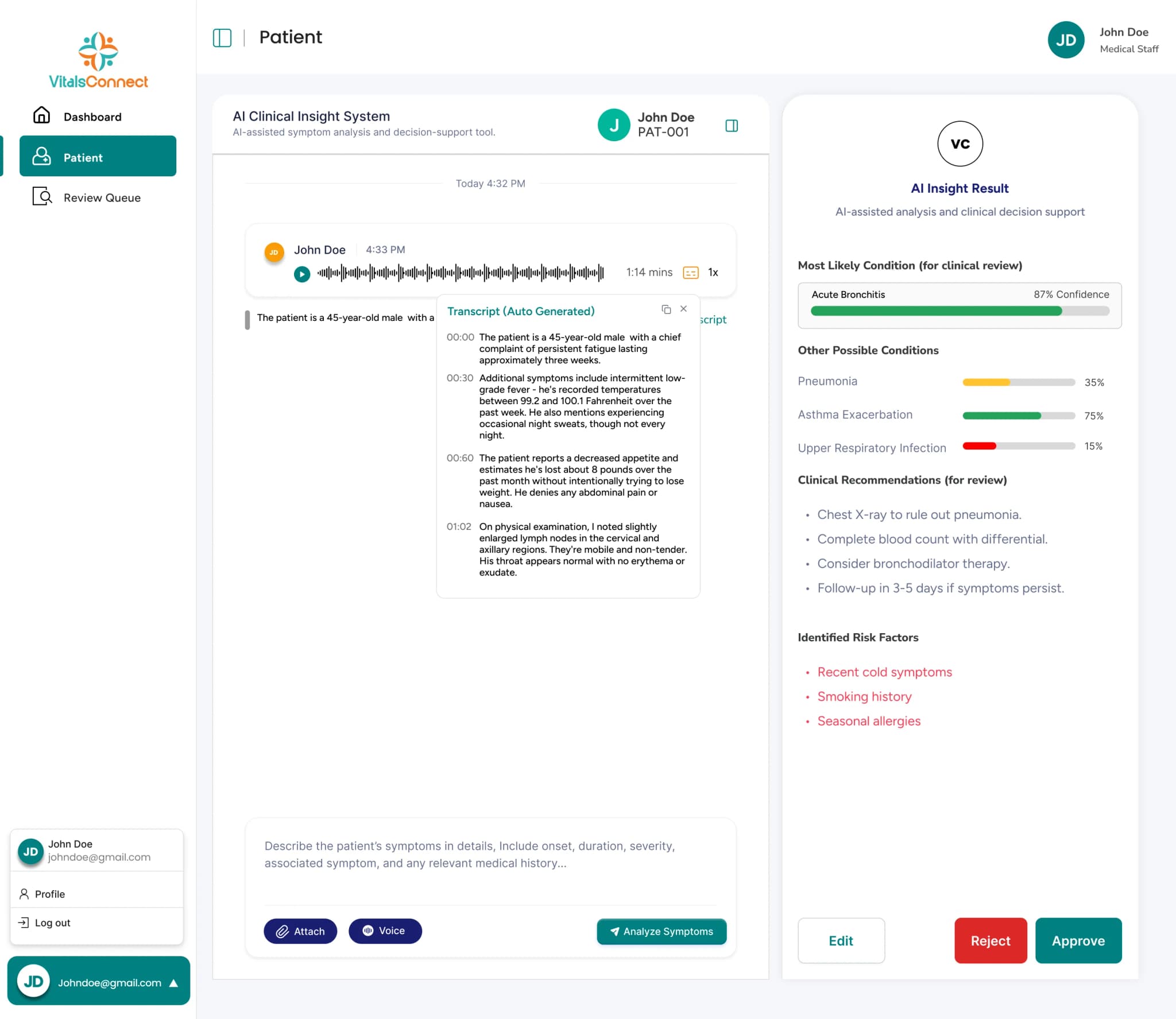
Talk It Through Instead of Typing It Out
Doctor and patient talk normally. The system separates their voices and turns the conversation into an editable transcript that attaches to the chart.
03 · Imaging
X-Rays and Scans Live in the Same Record
Chest X-rays, CT, MRI, and raw DICOM files sit beside the symptoms they explain, not in a separate system.
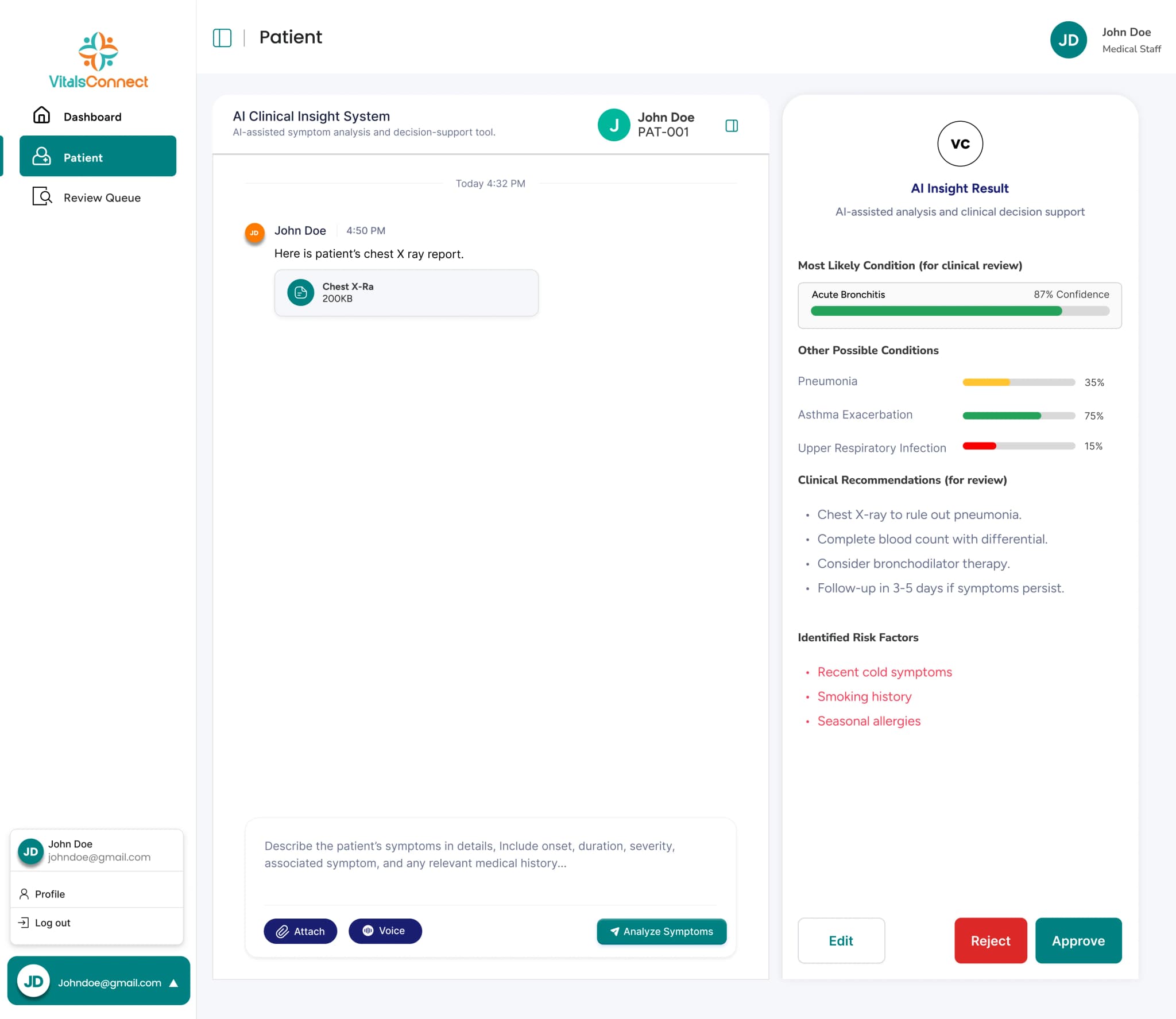
04 · Records Sync
New Patients Appear in Open EMR by Themselves
Add a patient once here and it shows up in Open EMR automatically—no double entry and no drifting records.
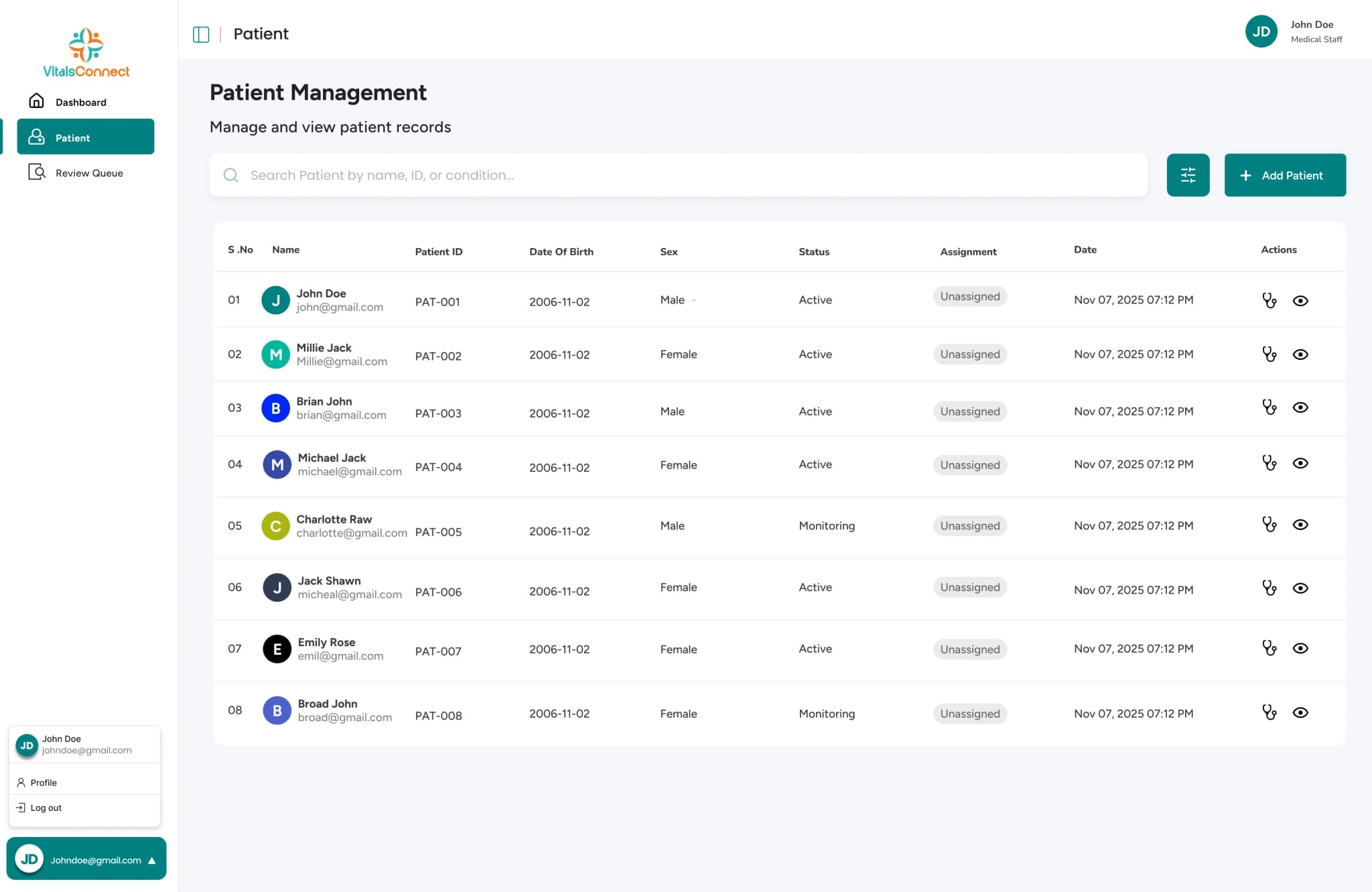
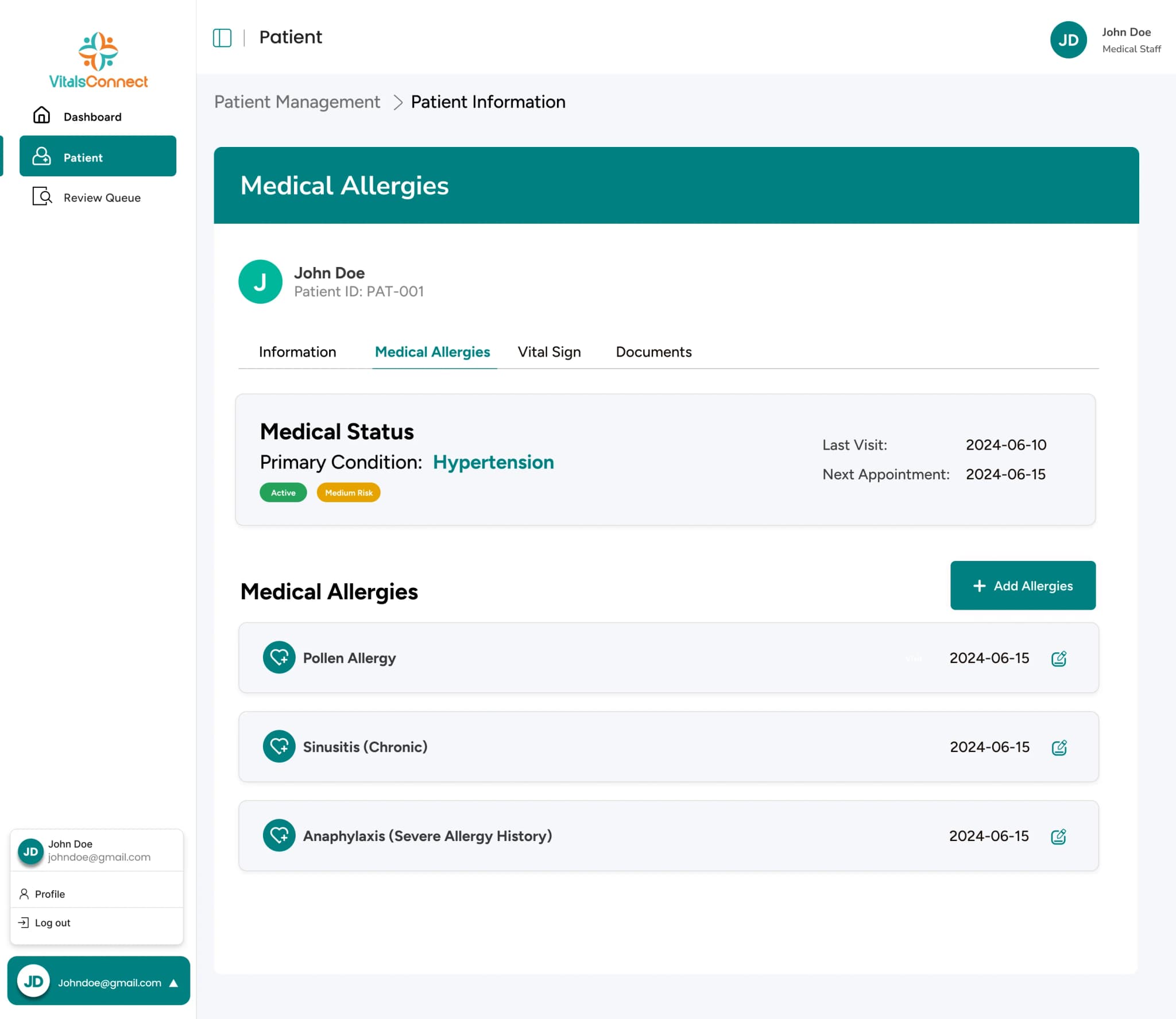
05 · Medical History
A Full History Travels With Every Patient
Active conditions, risk level, and logged allergies stay together so nothing gets missed at the next visit.
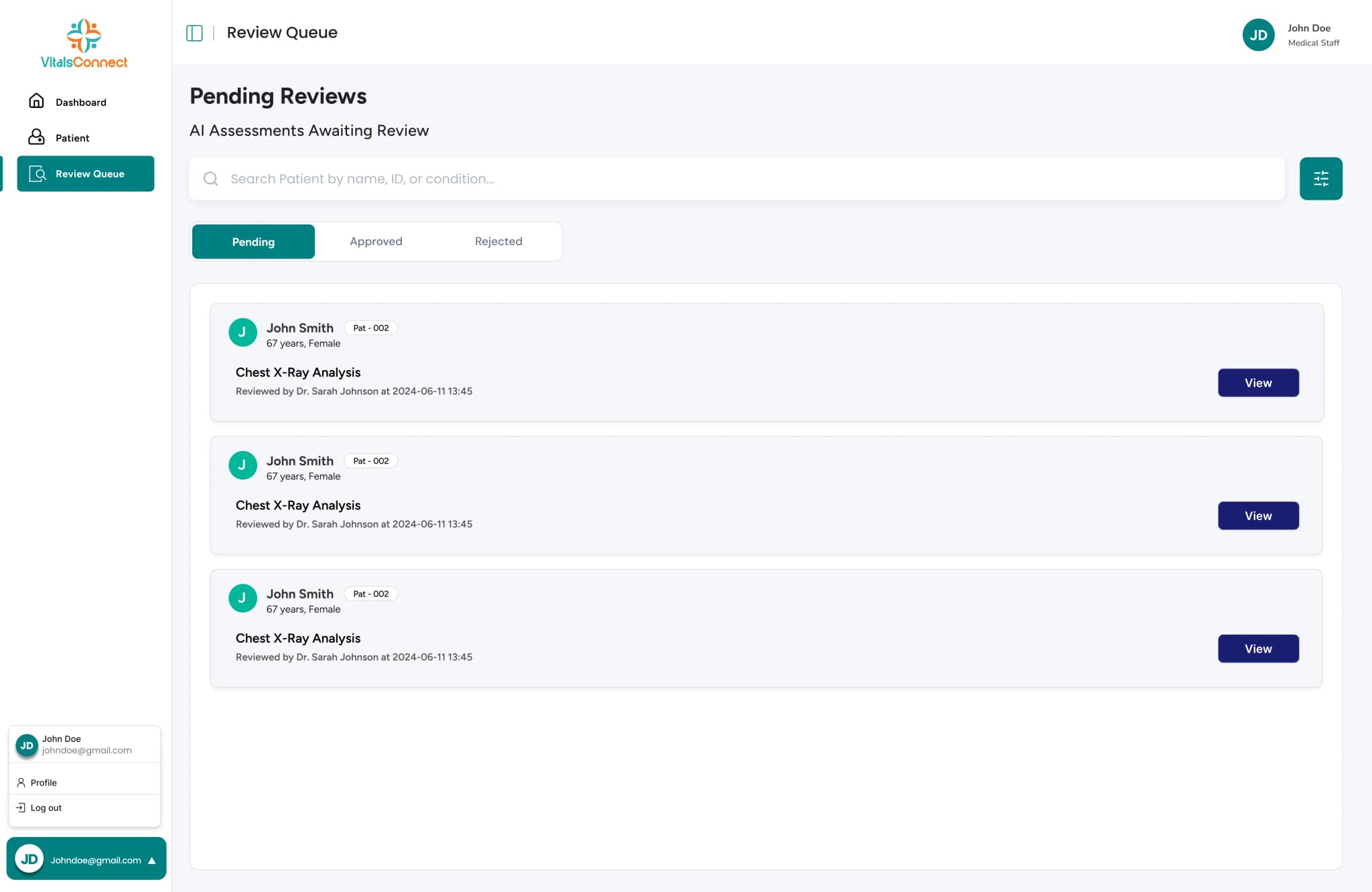
06 · Review Queue
One Queue for Every AI Report
Pending, approved, and rejected reports all sit in one list, so nothing waits on someone remembering to follow up.
07 · Accounts
Every Login Leaves a Paper Trail
Doctors sign up, an admin approves the account, and the history is logged from day one for the next audit.
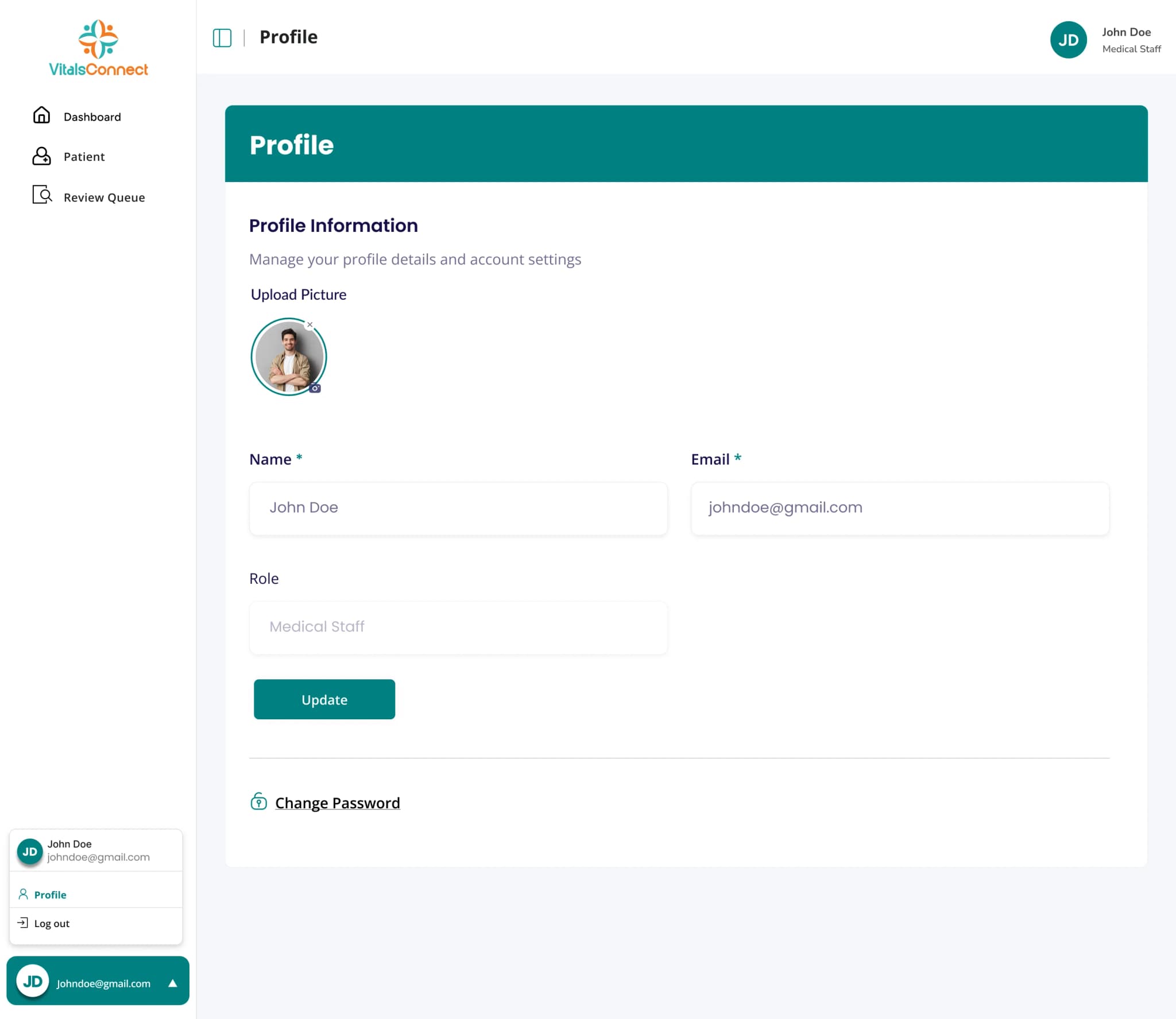
05 · How It Works
From a Symptom to a Signed-Off Record, in Five Steps
What happens between a doctor describing a symptom and it becoming a permanent, EMR-synced record.
01
Case Described
Symptoms typed, spoken, or attached as a scan
02
Identity Masked
Personal details stripped and encrypted
03
AI Reads It
Best guess, plus a confidence score
04
Doctor Signs Off
Approves, edits, or overrules the AI
05
Record Syncs
Saved here and pushed to OpenEMR
Every step is timestamped and logged, so any login, AI suggestion, or approval can be handed to an auditor on request.
06 · Outcomes
Time Back for Doctors, Fewer Records That Don’t Match
Every figure traces to a specific part of the platform: EMR sync, the audit log, or voice intake.
- Doctor admin time
- ~6 hrs
- Audit prep
- ~20 hrs
- Intake accuracy
- 15%
- Support load
- ~5 fewer
- Doctor onboarding
- 5 → 3 days
- Network rollout
- ~3 weeks
reclaimed per doctor each month by eliminating duplicate EMR entry
saved per HIPAA audit cycle from automated log assembly
fewer transcription errors from voice-captured intake
EMR mismatch tickets per month as two-way sync scales
to an active account with self sign-up and admin approval
faster through the API-driven EMR layer
Swipe →
FAQ
What Providers Ask Before Trusting AI With a Diagnosis
The questions that come up in almost every first conversation about clinical AI.
Does the AI Diagnose Patients on Its Own?
No. Every analysis is a confidence-scored suggestion a doctor can edit, approve, or reject before it becomes part of the patient record.
What Imaging Types Does It Read?
X-ray, CT, and MRI, including raw DICOM uploads attached to the same case as the symptom analysis.
How Does It Stay in Sync With Our EMR?
A two-way OpenEMR connection keeps doctors and patients synchronized in both directions.
How Is Patient Data Protected?
The platform uses HIPAA-compliant handling, field-level encryption at rest, and anonymization before analysis.
Still Reviewing Charts Before You Even See the Patient?
Twenty minutes with the team that shipped VitalsConnect. Bring your EMR setup and leave with a straight answer on what it would take.
- 51
- Products Shipped
- 94%
- Client Retention
- Top
- Rated on Clutch
Across 25+ industries
Across every engagement
Elite AI Firm designation
Related work


