
- Client
- Pokémon Card Analysis Platform
- Industry
- Trading cards & collectibles investment
- What we built
- Pricing dashboard with AI grading calls
- Who uses it
- Collectors and investors sending cards to PSA
Case Study · Pokémon Card Grading Intelligence
Every Card Has a Grading Decision Hiding Inside It.
The Pokémon Card Analysis Platform is a web app Kodexo Labs built to tell collectors and investors which cards are worth sending to PSA, and which aren't, before they pay the grading fee.
- 61k+
- Cards re-analyzed daily
- <24 hrs
- To flag a grading opportunity
- ~4 hrs
- Weekly research saved per collector
01 · Overview
One Dashboard Replaces a Spreadsheet of Guesswork.
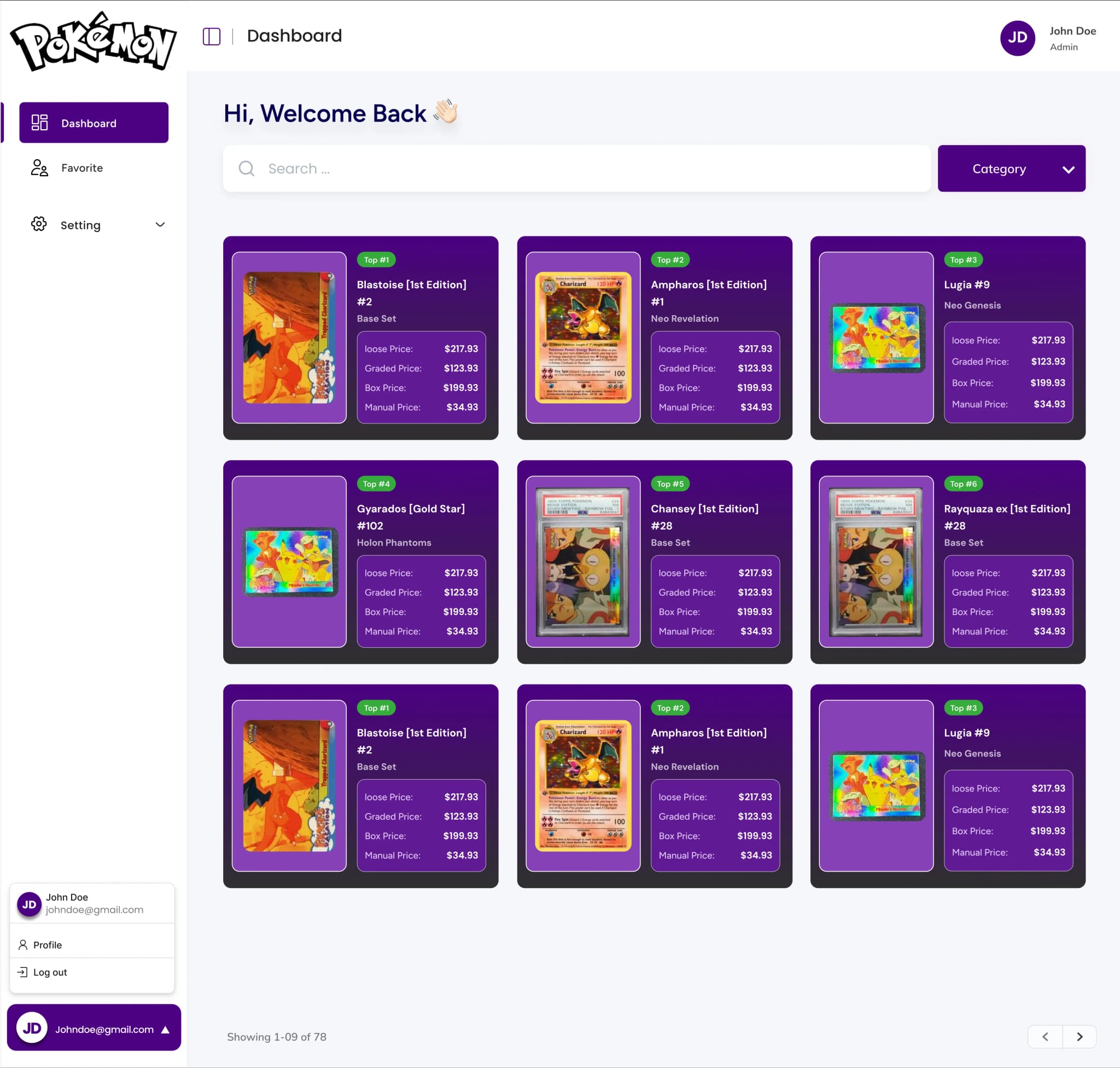
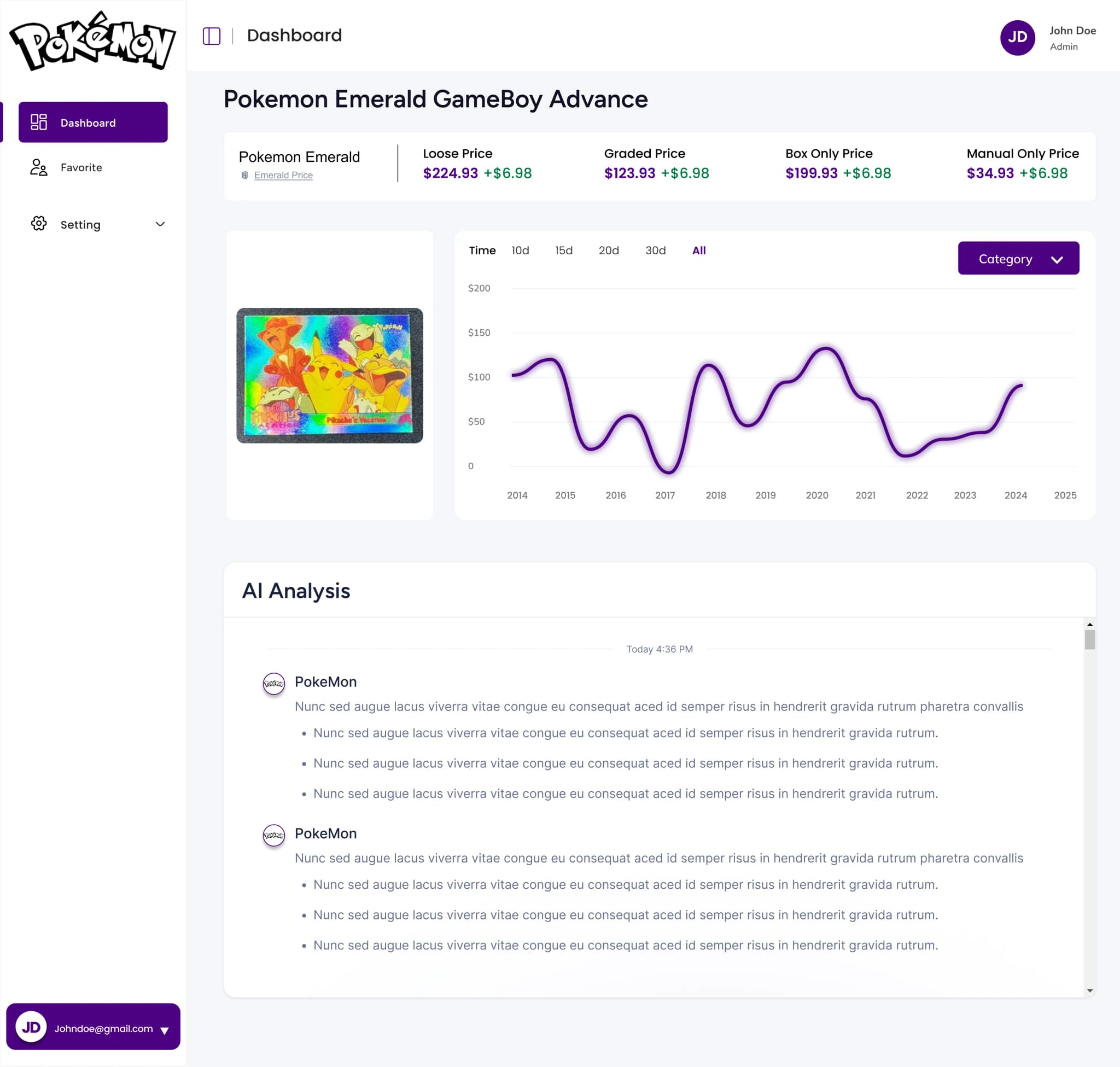
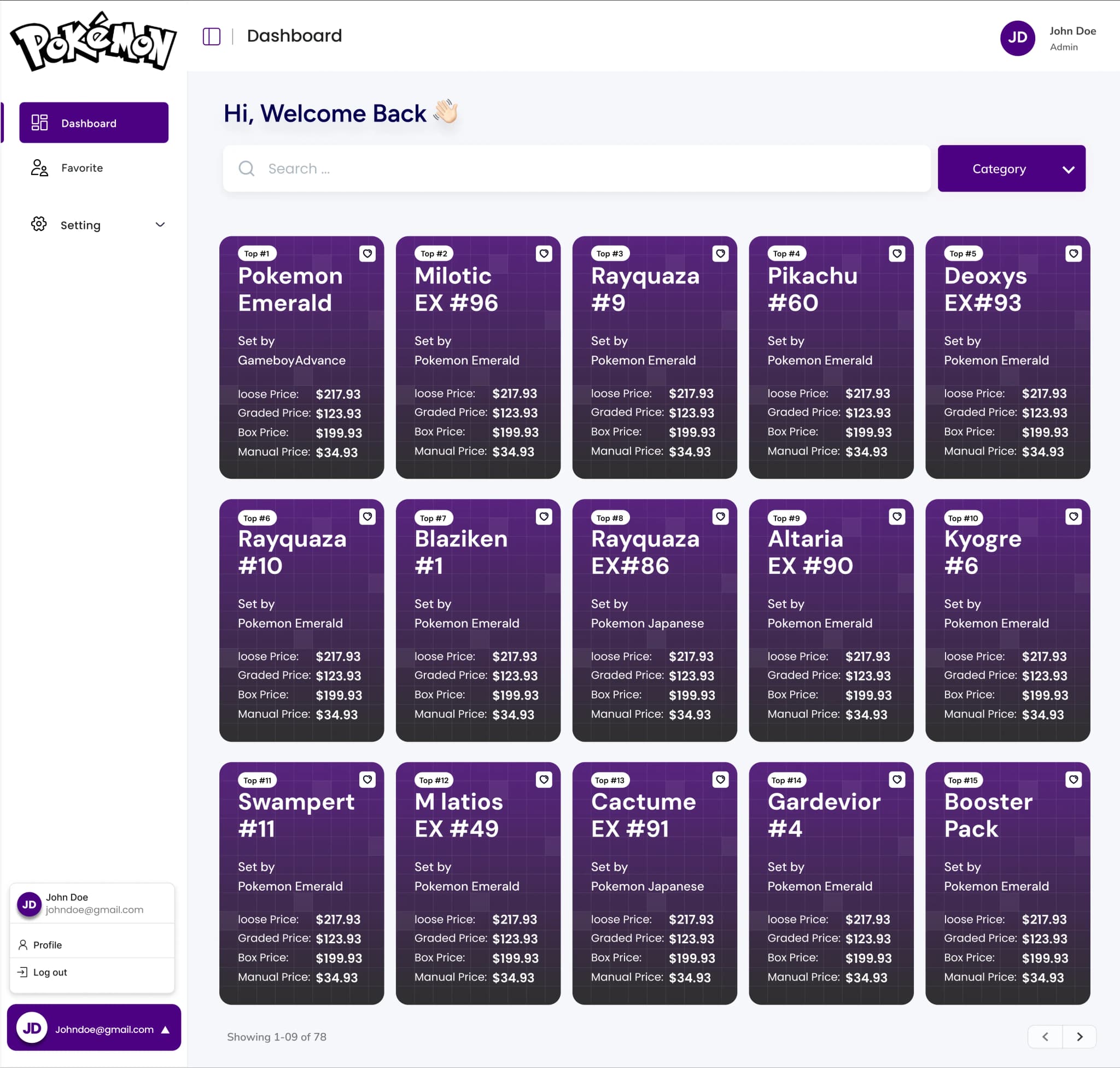
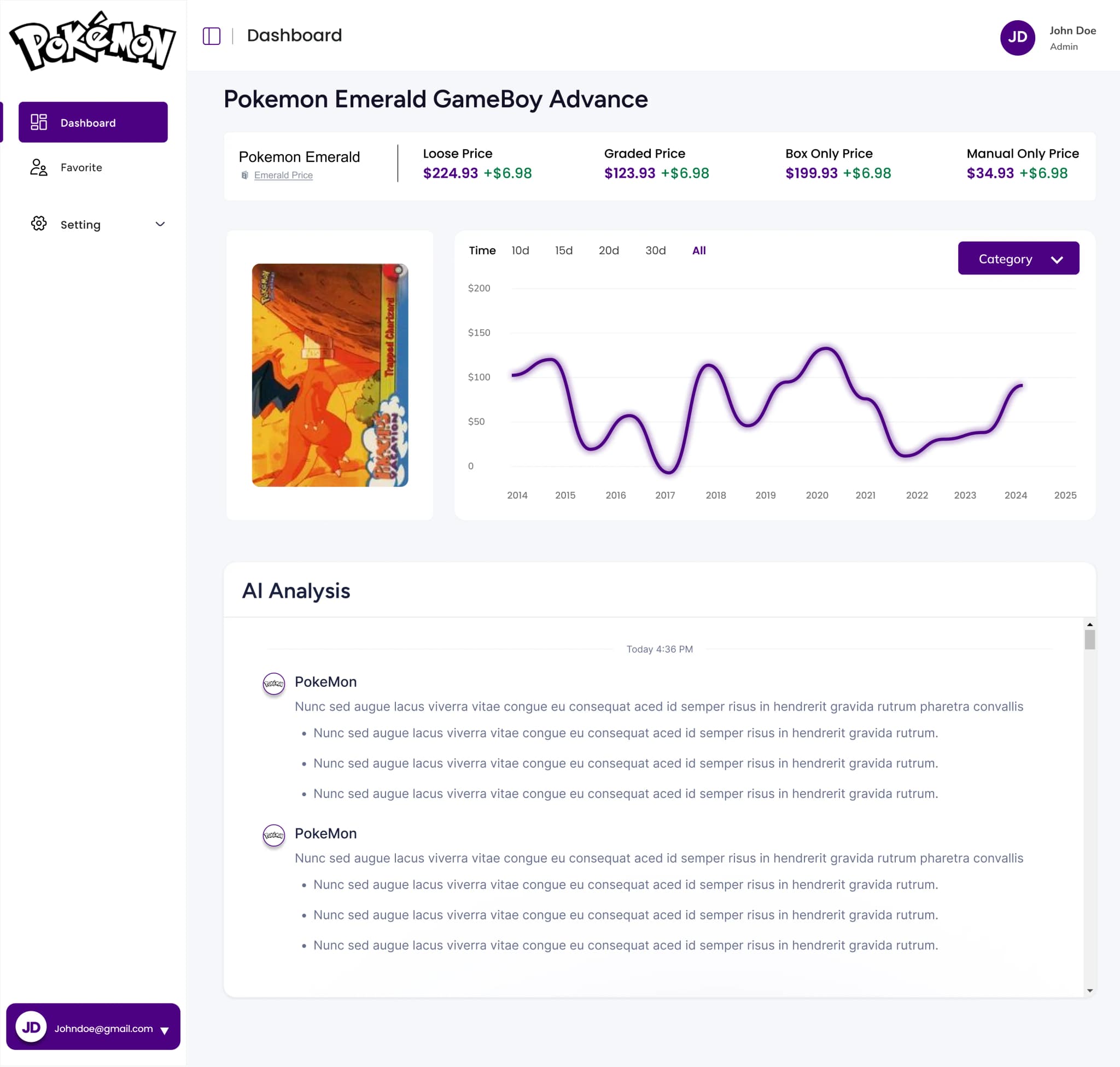
Instead of checking prices across sites by hand, a collector opens the dashboard and sees a card's raw and graded prices side by side, with the trend already charted.
Underneath, the platform weighs every card's value against its grading cost and writes a plain-language call: grade it, hold it, or skip it. Collectors get the answer; the platform did the math.
02 · The Problem
Grading Fees Don't Refund Themselves.
Every card sent to PSA costs money whether it comes back worth more or not. Three things made that bet hard to get right.
01
Checking Prices by Hand
Collectors look up each card across several sites. It eats hours, and one wrong number ruins the decision.
02
Prices Change Fast
Card values swing week to week. A price from Monday can be stale by the time the card ships.
03
Room to Grow
More users, more cards, and eventually other collectibles were coming. A spreadsheet would never hold that.
03 · The Solution
Data In, a Grading Call Out.
Five parts make that work: a daily data pipeline, an AI engine that scores the catalog, a dashboard that shows the call, a watchlist with alerts, and accounts that keep collectors and admins in separate lanes.
Data pipeline
Prices Land in the Database Before Anyone Asks
A daily job pulls prices from PriceCharting's Legendary tier, checks every row for errors or duplicates, and stores it in the database. No card gets analyzed on stale data.
- Automated CSV pull
- Duplicate & error checks
- ~61,000 cards refreshed
AI analysis
The Grading Call, Written in Plain English
The platform forecasts raw and graded prices for every card each day, then turns the best opportunities into a recommendation written in plain words a collector actually uses.
- Raw vs. PSA 9/10
- Grading fee factored in
Dashboard
Search a Card, See Everything It's Worth
Raw and graded prices sit side by side with a chart of how each has moved, filterable by date range, so a trend is obvious at a glance.
- Search & category filters
- Date-range filters
Favorites & alerts
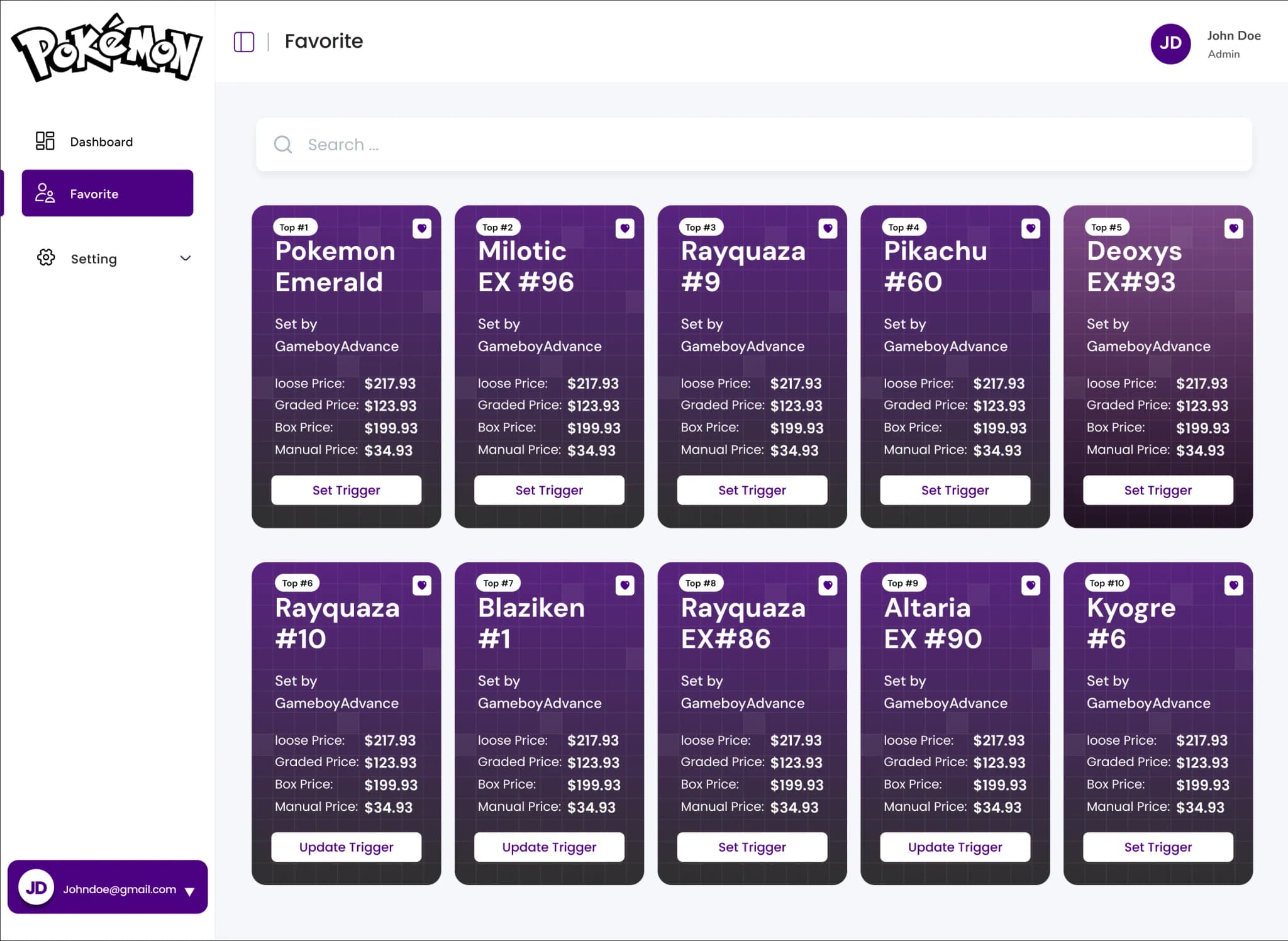
Watch a Card, Get Told the Moment It Moves
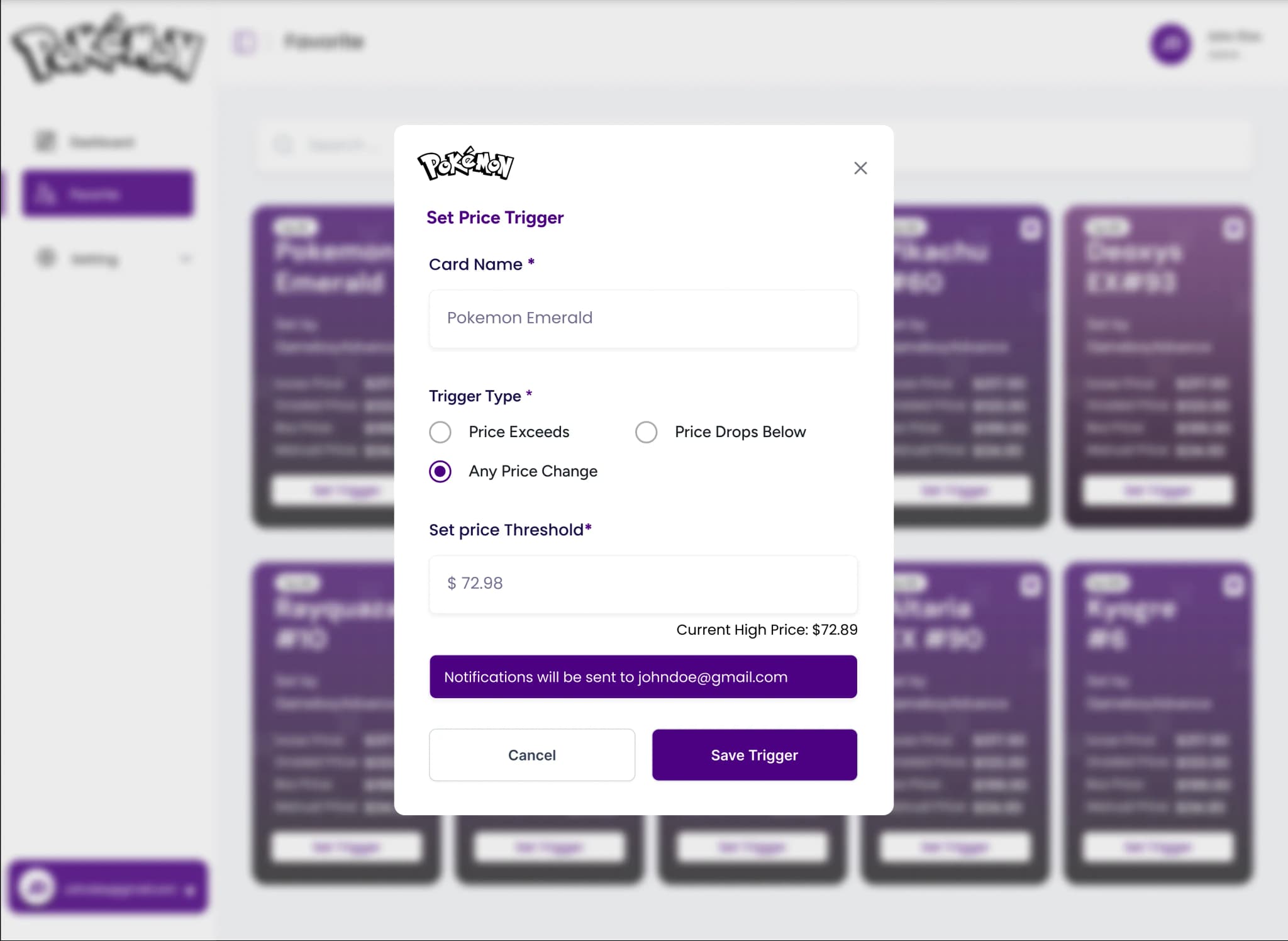
Favorite any card into a personal watchlist and set a trigger on a meaningful price move. The alert arrives in-app or by email, whichever the collector prefers.
- Threshold-based alerts
- In-app or email
Accounts & billing
Every Account Has Its Own Role
Secure sign-in keeps every account protected, and each person is assigned a collector or admin role. Collectors see their own plan and status; the Admin Portal stays out of view for everyone else.
- USER / ADMIN roles
- Hidden admin portal
Data pipeline
Prices Land in the Database Before Anyone Asks
A daily job pulls prices from PriceCharting's Legendary tier, checks every row for errors or duplicates, and stores it in the database. No card gets analyzed on stale data.
- Automated CSV pull
- Duplicate & error checks
- ~61,000 cards refreshed
AI analysis
The Grading Call, Written in Plain English
The platform forecasts raw and graded prices for every card each day, then turns the best opportunities into a recommendation written in plain words a collector actually uses.
- Raw vs. PSA 9/10
- Grading fee factored in
Dashboard
Search a Card, See Everything It's Worth
Raw and graded prices sit side by side with a chart of how each has moved, filterable by date range, so a trend is obvious at a glance.
- Search & category filters
- Date-range filters
Favorites & alerts
Watch a Card, Get Told the Moment It Moves
Favorite any card into a personal watchlist and set a trigger on a meaningful price move. The alert arrives in-app or by email, whichever the collector prefers.
- Threshold-based alerts
- In-app or email
Accounts & billing
Every Account Has Its Own Role
Secure sign-in keeps every account protected, and each person is assigned a collector or admin role. Collectors see their own plan and status; the Admin Portal stays out of view for everyone else.
- USER / ADMIN roles
- Hidden admin portal
Also Built: The Admin Console
A separate portal, hidden from collectors, that the client's team runs the platform from.
User Management
Create, edit, deactivate, and delete accounts, with a confirmation step before anything is removed.
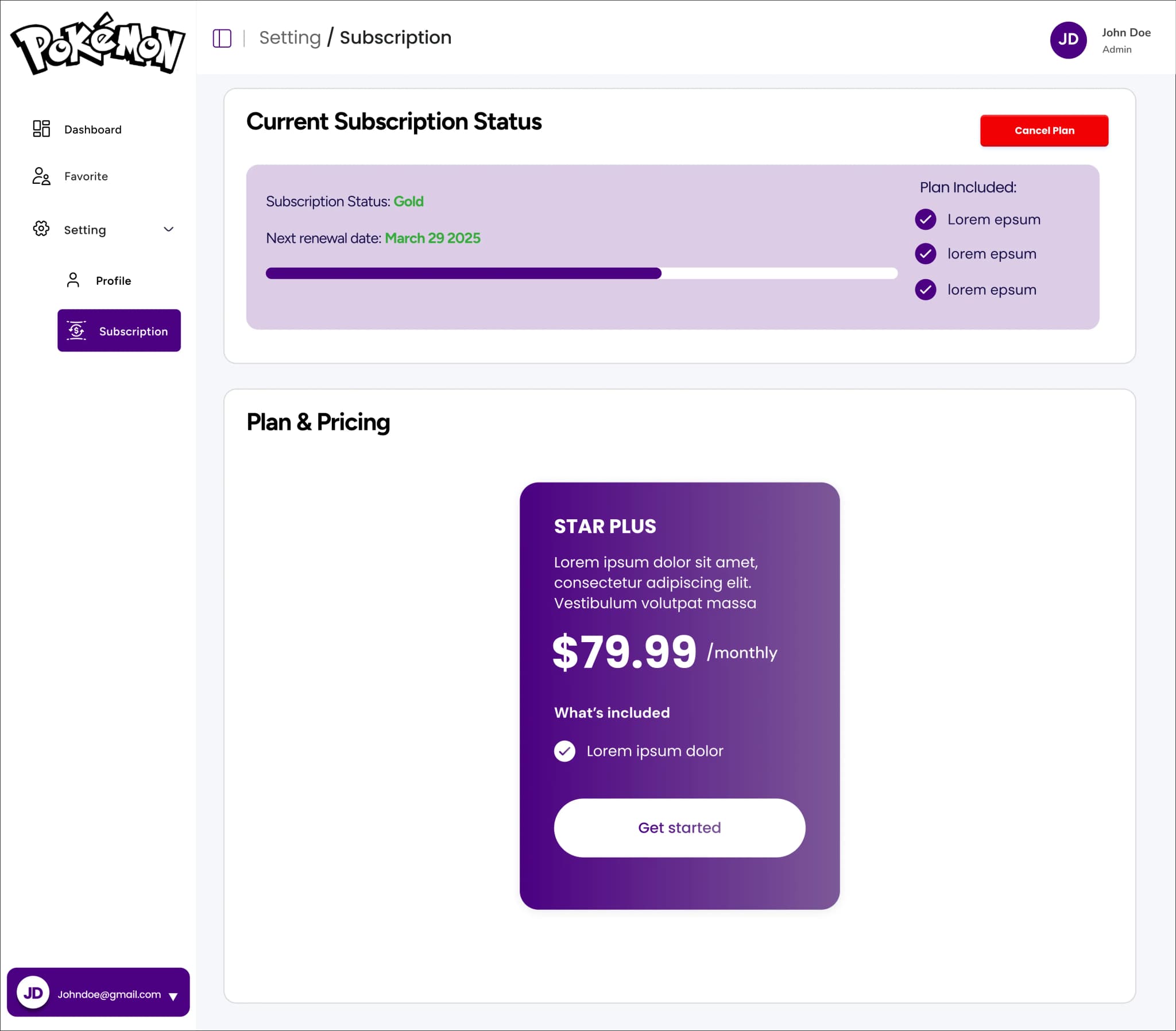
Subscription Tracking
Every subscription's plan, start and end dates, and renewal status: active, expired, or pending.
Payments via Stripe
Real-time payment status and every transaction, amount, and success or failure, in one dashboard.
Exportable Reporting
User lists and transaction records export to CSV or PDF for offline analysis.
The Product
Every Screen a Collector Touches
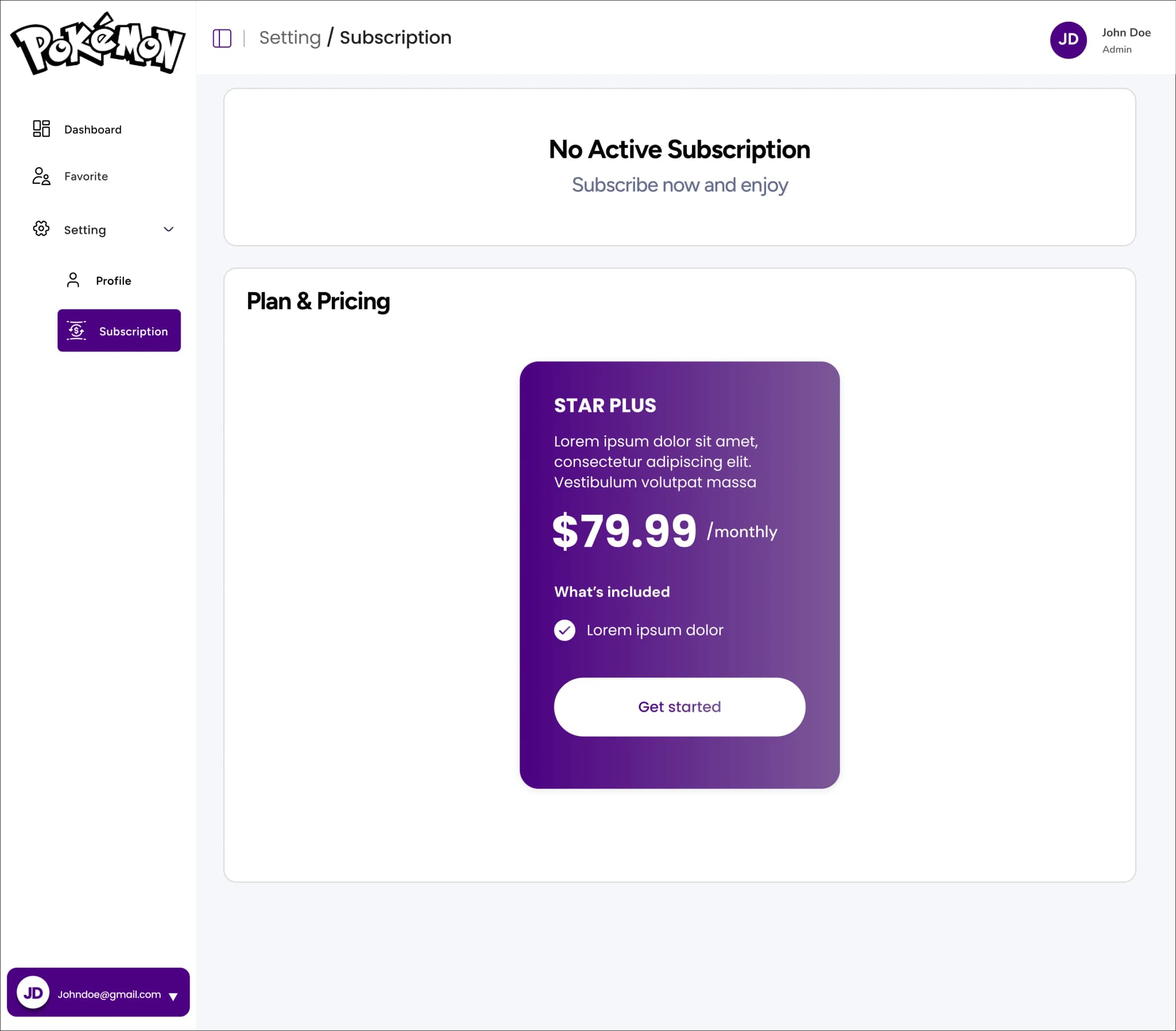
Setting a price alert, tracking a watchlist, and picking a plan.
04 · How It Works
Machine Learning Does the Math. The LLM Says It Out Loud.
Every card gets scored. Only the best opportunities get a written recommendation, which keeps the system useful and the AI bill small.
Import
Prices come in
A fresh CSV arrives from PriceCharting every day.
Forecast
The math runs
All 61,000 cards get a 30-day price forecast.
Shortlist
The best are picked
Only the cards worth real money move on.
Advice
Advice is written
Grade it, hold it, or skip it, written in plain words.
Collector
The collector decides
The advice appears next to the card's price chart.
1 Import
Prices come in
A fresh CSV arrives from PriceCharting every day.
2 Forecast
The math runs
All 61,000 cards get a 30-day price forecast.
3 Shortlist
The best are picked
Only the cards worth real money move on.
4 Advice
Advice is written
Grade it, hold it, or skip it, written in plain words.
5 Collector
The collector decides
The advice appears next to the card's price chart.
05 · Outcomes
Less Guessing Per Card, More Time Back Per Week.
The number that matters is 4 hours: the manual price research that disappears from every collector's week. Everything else follows from it.
- Per collector, weekly
- ~4 hrs
- Grading submissions
- -20%
- Time to detect
- <24 hrs
- AI operating cost
- <$1.35
- Catalog headroom
- 4x
- Pilot conversion
- 55%
reclaimed from manual price research
fewer low-ROI cards sent to PSA
to flag a new opportunity, down from several days
a day to run AI analysis across the full catalog
up to ~244,000 cards, same processing window
pilot-to-paid subscription conversion rate
FAQ
Questions Collectors and Investors Ask First.
The questions that come up in almost every first call about pricing intelligence for collectibles.
How current is the price data?
A daily job pulls a fresh CSV from PriceCharting's Legendary tier and validates every row before it reaches the database, so no card is priced from stale data.
Why doesn't every card get an AI-written recommendation?
Cost and clarity. Every card is scored daily, but written advice is generated for the strongest opportunities first, keeping the catalog's AI cost under $1.35 a day.
Can this expand beyond Pokémon cards?
The current scope is Pokémon-only, but the same daily processing window comfortably holds up to four times today's catalog.
What can admins see that regular users can't?
The Admin Portal is invisible to regular users and gated behind ADMIN-level authentication on every function: user accounts, subscriptions, and Stripe transactions.
What happens when a price alert fires?
Collectors are notified as soon as a favorited card crosses their threshold, in the app or by email.
How are subscriptions billed?
Stripe processes every payment with real-time status updates, and each subscription's plan, dates, and renewal status are tracked in the platform.
Sitting on a Catalog That Needs a Grading Brain?
Twenty minutes with a senior engineer who has shipped AI-powered pricing engines at production scale. Bring the catalog, leave with a straight answer on scope and cost.
- 51
- Products Shipped Across 25+ industries
- 94%
- Client Retention Across every engagement
- Top
- Rated on Clutch Elite AI Firm designation
Related work

